Last updated November 21, 2026
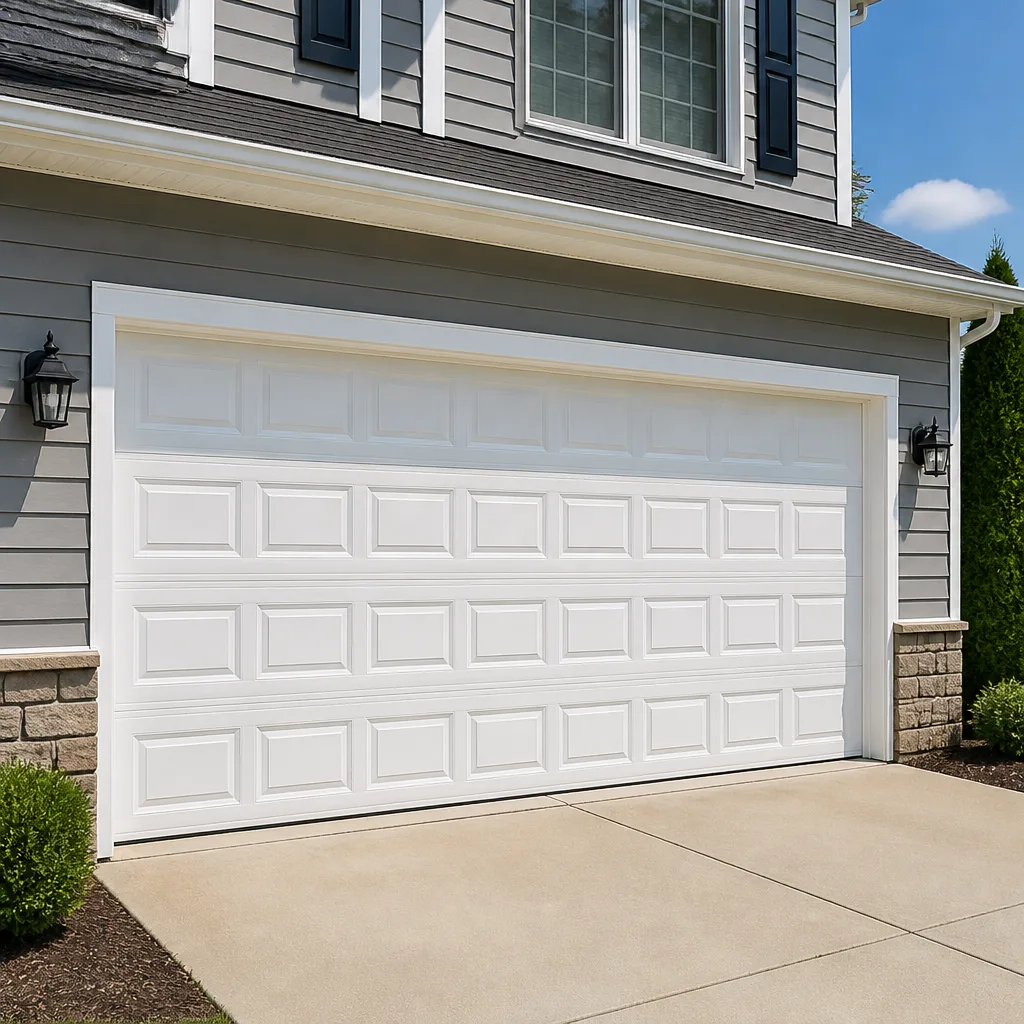 Raised-panel steel
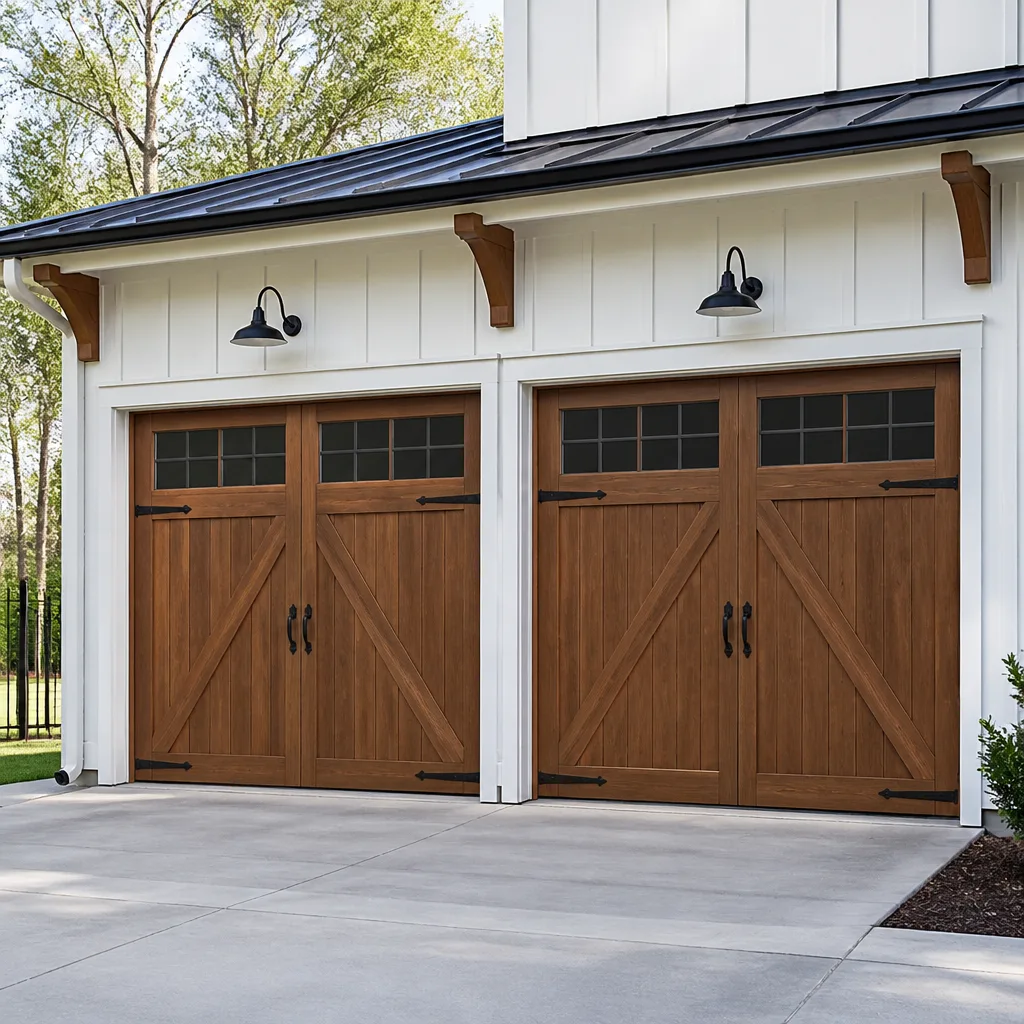 Carriage house
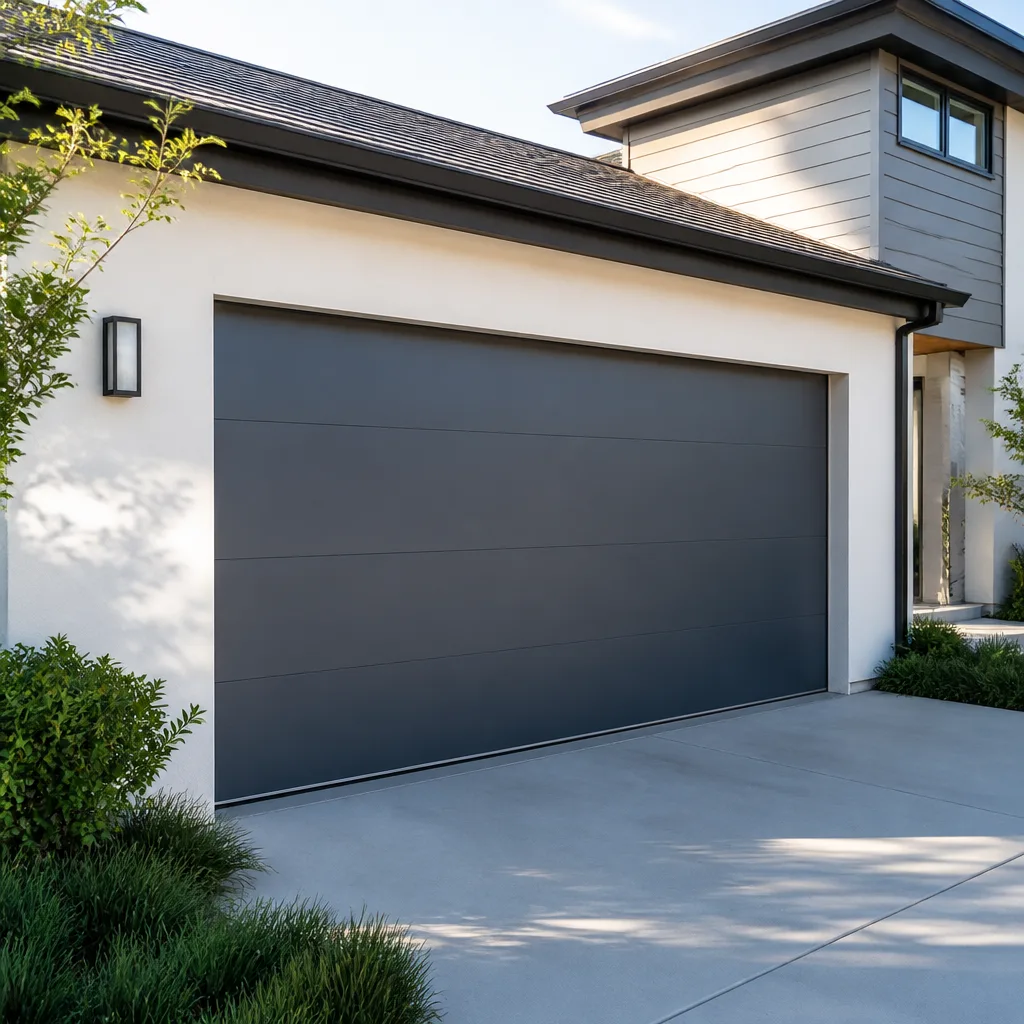 Modern flush
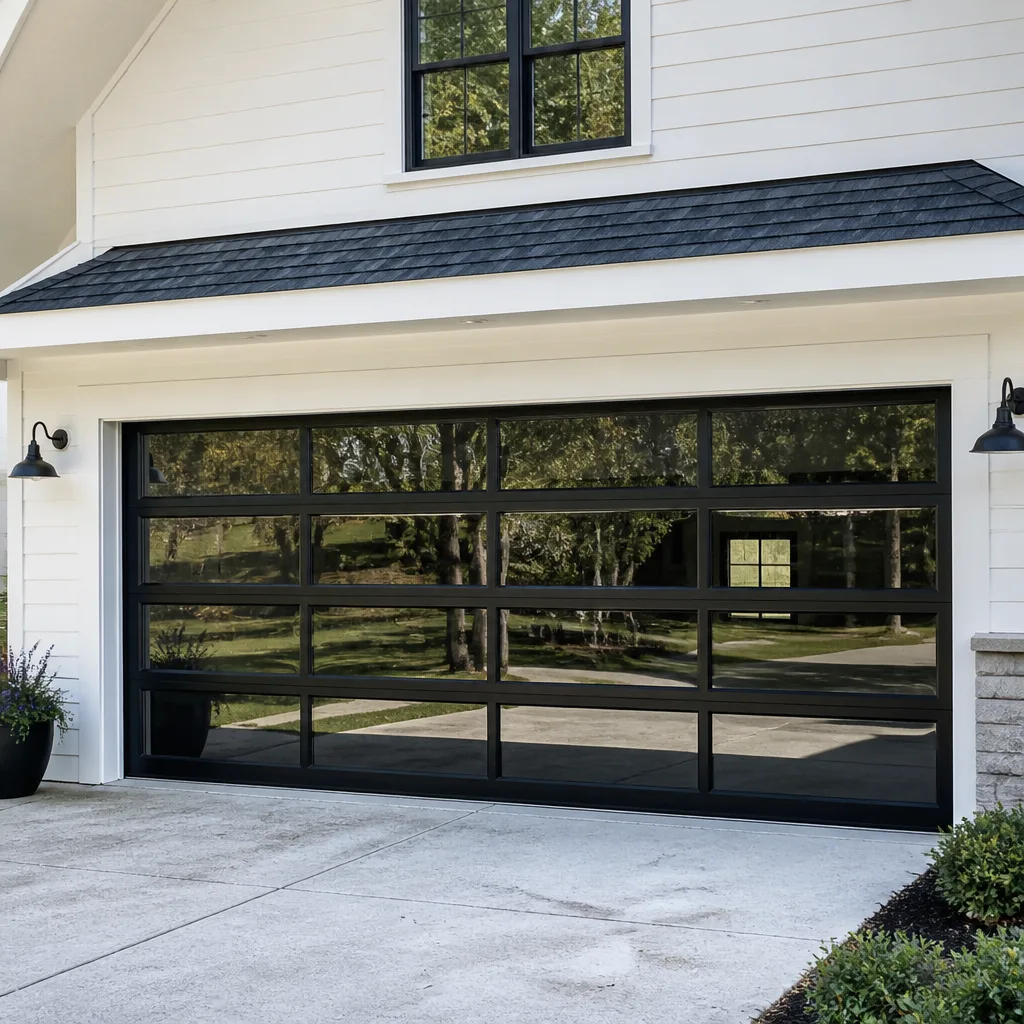 Full-view glass
 LiftMaster openers
 Chamberlain openers
Full 25-point door and opener safety check with every visit - springs, cables, rollers, tracks, and your LiftMaster or Chamberlain opener included
You get a price before we start. It does not change when the pro arrives.
Get your free estimateGarage Door Cost Breakdown: The Pearland Homeowner’s Reference for 2026
The most common overcharge in Pearland garage door repair doesn’t show up on the parts line. It shows up on labor for a job that takes under 45 minutes, billed at a rate that assumes a two-hour minimum. A technician swaps a torsion spring in less time than it takes to drink a coffee, and the invoice quietly reflects an hour of work that never happened. That’s not a scam exactly; it’s just a pricing model built for a different kind of job. In this reference, we break down what each common garage door job in Pearland actually costs in 2026, how much of that is parts versus labor, and how to read a quote well enough to know whether you’re being treated fairly. You’ll come away with a defensible benchmark for springs, cables, rollers, panels, and openers, plus the decision thresholds that tell you when repair stops making financial sense.
Quick Answer
Garage door repair in Pearland in 2026 typically runs $120 to $400 for most single-item fixes, with torsion spring replacement at roughly $180 to $340 per spring and a matched pair running about twice that. Full door replacement usually lands between $1,100 and $3,200 depending on size, material, and whether the opener is being replaced at the same time. Labor is where quotes diverge most, so the written estimate – not the phone number – is the price that counts. Free estimates are the fastest way to pin down your actual number.
Styles & brands we work with
- Raised-panel steel
- Carriage house
- Modern flush
- Full-view glass
- LiftMaster openers
- Chamberlain openers
Table of Contents
- Component-Level Price Ranges for the 2026 Pearland Market
- What Drives Labor Cost Variation in Pearland?
- How to Read a Quote: Parts-to-Labor Ratio and Red Flags
- The True Cost of Deferring a Common Repair
- Repair or Replace? Decision Thresholds by Age and Condition
- Opener Replacement Costs and When the Opener Is the Real Problem
- Emergency and After-Hours Pricing
- How to Get an Accurate Estimate in Pearland
Component-Level Price Ranges for the 2026 Pearland Market
Every garage door problem resolves down to a handful of components, and each has its own price band. Knowing those bands is the single biggest advantage you can have before you pick up the phone. Here’s how the numbers break down for a typical residential door in Pearland.
- Torsion springs: $180 to $340 per spring, installed. A matched pair is usually replaced together, so budget roughly $360 to $680 for a pair. Budget springs sit at the low end with shorter service life; higher-grade springs cost more up front and last noticeably longer.
- Extension springs: $120 to $220 per spring. Often cheaper than torsion but a different mechanism with its own safety considerations.
- Cables: $110 to $200 per cable, installed. Cables fray and snap under tension and should never be handled without the proper tools.
- Rollers: $120 to $180 for a full set of nylon or steel rollers. This is one of the least expensive repairs and one of the most frequently ignored.
- Bottom seal or weatherstripping: $90 to $160, installed. Pearland’s humidity and summer heat wear these out faster than homeowners expect.
- Individual panels: $150 to $400 per panel depending on whether it’s a stock profile or a matched manufacturer panel. Clopay and Amarr both offer replacement panels for their common residential lines, which keeps the cost down compared to a full door.
- Hinges and brackets: $60 to $150 for a set, installed. Small parts, but they carry load and shouldn’t be run past their service life.
- Opener replacement: $350 to $750 installed, depending on belt versus chain drive and whether smart features are included.
The spread between budget and quality tiers matters more than most homeowners realize. A budget spring may cost half what a premium spring does, but it may last a fraction as long. That trade-off is worth asking about directly. When we quote a spring, we tell you what tier you’re getting and what the alternative costs, so the decision stays in your hands.
Pearland’s housing stock spans older single-car garages in established neighborhoods and newer two-car builds with larger doors. A two-car door is heavier and its springs run at higher tension, which pushes some component costs up. That’s a physical reality of the door, not an upsell.
What Drives Labor Cost Variation in Pearland?
Labor is where the real differences live. Two quotes for the same spring job can differ by $100 or more, and part of that gap is legitimate and part of it isn’t. Here’s what to watch.
The time-on-job problem. A single torsion spring swap on a standard residential door takes under 45 minutes for an experienced technician. Some shops price labor as if every job takes two hours. That’s how a modest repair turns into a $300 invoice for work that took less time than a lunch break. Ask directly: how long will this job take, and is labor billed by the hour or flat-rate per job? Flat-rate pricing is fairer for the customer because it rewards the technician’s speed rather than penalizing you for their efficiency.
Emergency and after-hours rates. A door that won’t close at night, or one that’s jammed with a car trapped inside, needs emergency service. Emergency rates run higher than standard appointment windows – that’s universal in the trade. You’re paying for scheduling priority and technician availability outside the usual window. If the emergency fee is predictable and disclosed up front, that’s fair. If it feels hidden until the invoice, ask before you agree.
Single-car versus two-car complexity. A single-car door is lighter, narrower, and simpler to work on. A two-car door may use heavier springs, taller tracks, and more panels, which takes more time. Labor on a two-car door often runs 20 to 30 percent higher than the same repair on a single-car door.
Residential versus commercial-grade hardware. Pearland has plenty of residential garages, and most of what we see is residential-grade. If your property has light commercial hardware – heavier gauges, high-cycle springs, industrial openers – the labor and parts cost more because the components do. That’s not a markup; that’s physics and material.
Brand familiarity. A technician who’s serviced LiftMaster, Chamberlain, Genie, and Craftsman systems thousands of times moves faster than someone learning the mechanism on your door. Speed on a repair is the customer’s friend. That’s why we service the brand you already have rather than turning down a job because the label isn’t on a shortlist.
How to Read a Quote: Parts-to-Labor Ratio and Red Flags
A quote is a document you should be able to read like a professional. The parts-to-labor ratio is the first thing to look at. For most residential repairs, a healthy range is roughly 40 to 60 percent parts and 40 to 60 percent labor. When one side dominates heavily, it usually tells a story.
- Look at the parts line. Is the part named by type and quality tier, or just lumped into “materials”? A serious quote says “torsion spring, pair, high-cycle rating” rather than “$X for parts.”
- Look at the labor line. Is it flat-rate or hourly? Does it include a trip charge hidden inside? A surprisingly low labor number paired with a high-diagnostic-fee line is a warning sign.
- Check the warranty terms. Warranty is the single most revealing line item. A quote with a great price and no warranty on parts is almost always a lower-grade part.
- Ask what’s excluded. Does the price cover disposal of the old door or springs? Track adjustment? Testing the opener? Get it in writing.
- Compare the total to the component band above. If a quote for a spring replacement comes in far below $180 or far above $340 per spring, ask why. There’s usually an answer, and sometimes it’s legitimate. Sometimes it isn’t.
An unusually low total price almost always means one of three things: a lower-grade part, a shorter warranty, or a labor line that’s been trimmed to win the quote and will be made up somewhere else. We’ve seen quotes where the spring cost $80 and the customer was back on the phone within a year. That’s not a bargain; it’s a deferred cost.
Always ask for the quote in writing before any work starts. Our written estimate is the number you pay – if the technician finds something the initial diagnosis missed, you hear about it before they touch a tool, not after.
The True Cost of Deferring a Common Repair
Garage door wear compounds. Ignore a $120 set of worn rollers and the door starts running rougher, which stresses the cables and the torsion system. Six months later you’re looking at a $400-plus cable and drum repair that started as a $120 line item. Deferring a cheap fix is one of the most reliable ways to pay twice.
The pattern is predictable:
- Worn rollers: $120 to $180 to replace. Ignored, they force the door to run unevenly and stress the cables. Six months later, you’re in cable-repair territory with a bill two to three times higher.
- A small cable fray: $110 to $200 to replace. Ignored, the fray worsens until the cable snaps, and now you may be down a door and facing an emergency call at a higher rate.
- A slow-drooping spring: $180 to $340 to replace. Ignored, it can break outright, and a broken spring can tilt the door and damage the opener.
- A failing opener gear or logic board: $200 to $500 to repair. Ignored, the door can be left half-open and unsecured, which turns a repair into both an emergency and a home-security concern.
There’s a maintenance logic to all of this. A door that opens and closes smoothly is a door that’s not wearing against itself. Pearland’s summer heat accelerates wear on lubricated components, so a quick visual check and a wipe-down of the rollers and hinges a couple of times a year goes a long way. It’s not a career; it’s five minutes with a rag. But a technician who checks the whole system once can catch the small failures before they become big ones.
If a repair keeps coming back to the same component, that’s a sign the door has an underlying alignment or tension issue. Replacing the same part twice is a losing game. Ask what’s causing the repeat failure, not just what it costs to fix it again.
Repair or Replace? Decision Thresholds by Age and Condition
Repair first, replace only when it makes sense – that’s the position we hold, and it’s not just a slogan. Most doors get replaced years before they need to be. But there are real thresholds where the math flips.
- Single component failure on a dry, structurally sound door: repair. A door that needs one spring or one cable is a repair, full stop.
- Two or more failures within twelve months on a door past roughly 15 years: start pricing replacement. The cumulative repair cost starts approaching a meaningful fraction of a new door, and the next failure is usually already forming.
- Panel damage plus track damage plus opener failure at the same time: replacement usually wins. That combination often runs $900 or more in repairs on a door that isn’t worth the investment.
- A door that no longer matches the opening or drags on the frame: replacement or a full hardware rebuild. A door that contacts the frame is a door that will keep wearing rapidly regardless of how many parts you swap.
- A door the homeowner has already updated elsewhere: if you’ve replaced the opener and the springs but the panels are rattling and the paint is peeling, the parts math leans toward a new door and a clean slate.
A new door on a standard single-car opening runs roughly $1,100 to $2,200 installed. A two-car door with better insulation and a more substantial panel profile runs $1,800 to $3,200 installed. The exact number depends on the panel style, the insulation level, and whether the opener is being replaced at the same time. Brands like Clopay and Amarr offer profiles from builder-grade to more substantial options, and we’ll talk through the trade-offs rather than steering you to the top of the range.
One thing that tilts the decision: a new door usually comes with a warranty on the door and, separately, on the installation. A door that’s been repaired four times is a door running on borrowed time and no warranty. If you’re heading toward a full replacement, get a written price with the panel profile named and the opener question answered separately.
Opener Replacement Costs and When the Opener Is the Real Problem
A surprising share of “the door won’t work” calls turn out to be opener problems, not door problems. A failing logic board, a stripped gear, or a bad safety sensor can leave an otherwise healthy door stuck in place. Replacing the whole door system when only the opener is at fault is one of the most expensive mistakes in the trade.
Opener repair costs typically run $150 to $400 depending on the failure. Board replacement and gear replacement sit in the middle of that range; small fixed issues like a misaligned safety sensor can be cheaper. Full opener replacement runs $350 to $750 installed, depending on belt versus chain drive, horsepower, and smart features.
We work on the major opener brands – LiftMaster, Chamberlain, Genie, Craftsman – and the diagnosis starts with the mechanism, not the model number. A technician who’s seen the same opener fail the same way a hundred times can usually name the problem in a few minutes. That’s not magic; it’s pattern recognition.
Two decisions matter here. First, is the opener actually the problem, or is the door binding and forcing the opener to work harder than it should? A door with failing rollers will kill a healthy opener if you let it. Second, if the opener is genuinely end-of-life, does the door around it justify a new opener, or are you investing in a mechanism on a door that’s also near retirement? Those questions get answered before anyone quotes a part.
If you’ve been nursing an opener that only works when you hold the wall button, or one that reverses for no reason, garage door opener repair is usually more economical than replacement. A technician can tell you which side of that line you’re on within a single visit.
Emergency and After-Hours Pricing
Emergency garage door service costs more than a scheduled appointment, and that’s true across the trade. The premium covers scheduling priority and technician availability outside standard appointment windows. A door that won’t close, a door jammed with a car underneath, or a spring that broke and left the door stuck halfway – these are the calls that can’t wait.
Typical emergency service in Pearland runs a premium of roughly $75 to $150 over the standard repair price, depending on the time and the scope. Spring repair, cable repair, and opener failures make up most of what we see after hours.
Emergency service is a named service for us, not a phone-tree upsell. If a spring breaks and your door is stuck, we’ll tell you what we can do and when. We won’t promise a response time we can’t stand behind, but we will be straight about our availability.
One hard rule: if your door has a broken spring or a snapped cable, don’t try to force it. Springs are under extreme tension and cables are load-bearing; both can cause serious injury when handled without the right tools. Leave the door closed if you can, and call a technician. The cost of an emergency visit is nothing compared to the cost of a hospital visit.
If your door is stuck and you’re not sure whether it’s an emergency, call anyway. We can talk through the symptom and tell you whether it’s safe to wait for a standard appointment or whether it needs attention now. That’s part of what a specialist should offer.
How to Get an Accurate Estimate in Pearland
The fastest route to a fair price is a written estimate after an on-site look. A phone quote is a starting point, not a commitment, because the technician can’t see the door, the tracks, the springs, or the opener from the other end of the line. Here’s how to move from a guess to a number.
- Describe the symptom precisely. “It won’t close” is less useful than “it goes down about a foot and reverses.” The symptom tells the technician what to look at first.
- Have the door’s approximate age and the opener brand ready. If it’s a Clopay, Amarr, Wayne Dalton, or Craftsman door, that helps with parts sourcing. The same goes for the opener – LiftMaster, Chamberlain, Genie, and Craftsman are all things we see daily.
- Ask for the written estimate before work starts. It should name the parts, the labor, and the warranty. If the quote doesn’t have those three things, ask for them.
- Ask about the door’s overall health. A good technician will point out any issues they see beyond the immediate repair. That’s how you find the $120 roller problem before it becomes a $400 cable problem.
- Confirm the total you’ll pay. The written estimate is the number. If something changes mid-job, you should hear about it before the technician proceeds.
For a broader view of what we service, our garage door repair page covers the full range of residential work, and if springs are the concern, our garage door spring repair page goes deeper into how we approach that job. For a quick look at the whole operation, visit the Pearland Garage Door Repair Co home page.
We’re a specialist, and that shapes the quote. We don’t do general contracting or unrelated trades – every technician on a garage door job is working on garage doors. Our technicians have up to 11 years of experience, and they’ve seen the most common failure modes on the brands Pearland homeowners actually own. That’s not a sales point; it’s why the diagnostic is usually fast and the quote is usually accurate.
Common Mistakes to Avoid
- Accepting a phone quote as final. A phone quote can’t account for track alignment, spring tension, or a failing opener. Get the written estimate after an on-site look, and treat the phone number as a starting point.
- Choosing the lowest bid without checking the warranty. A $100 spring job with a 90-day warranty costs more over five years than a $250 job with a multi-year warranty. Warranty is the dividend on a proper part.
- Ignoring a small repair because it “still works.” A slow-drooping spring or a squeaking roller is a signal, not a personality quirk. The expensive repair is usually the one you skipped six months ago.
- Trying to replace a spring or cable yourself. Springs are under extreme tension and cables are load-bearing. The tools and the training are the whole point; this is not a hardware-store Saturday project.
- Replacing the entire door when only the opener is failing. If the door moves freely by hand and the opener is the only thing that’s died, you’re looking at an opener repair, not a door replacement.
- Not asking what’s excluded from the quote. Disposal, track adjustment, and opener testing should be spelled out. A missing line item is a future line item.
- Letting a door drag on the frame. A door that rubs on the track will wear through parts faster than any other failure mode. If it’s dragging, get it looked at before the repair list grows.
See the difference
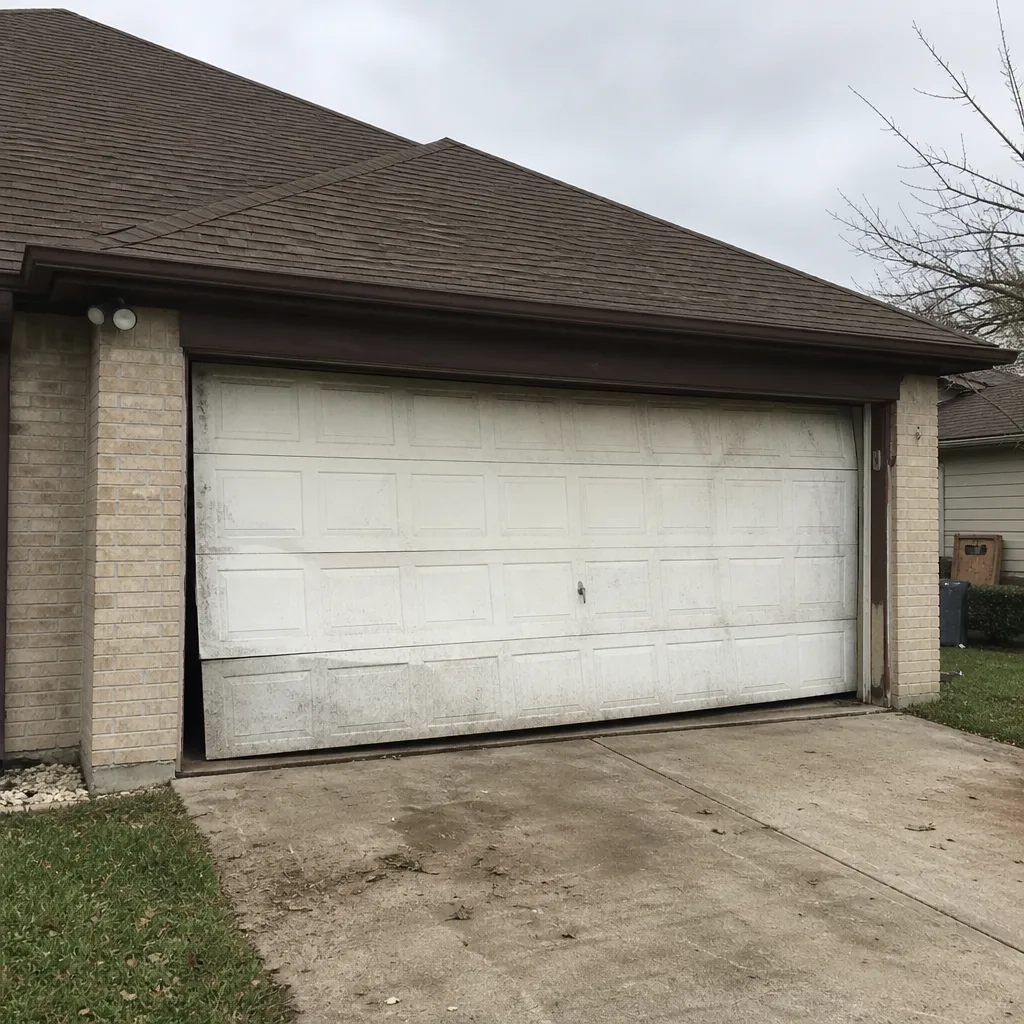 Before
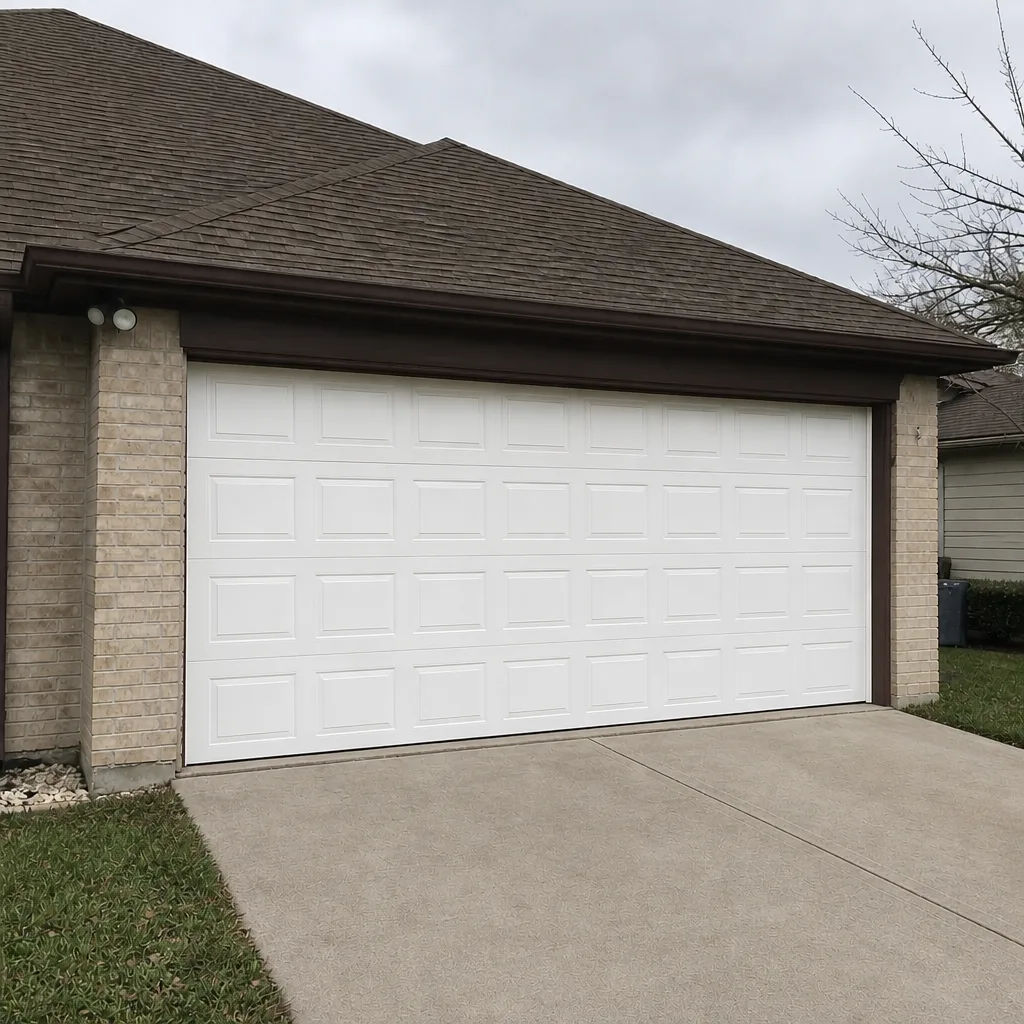 After
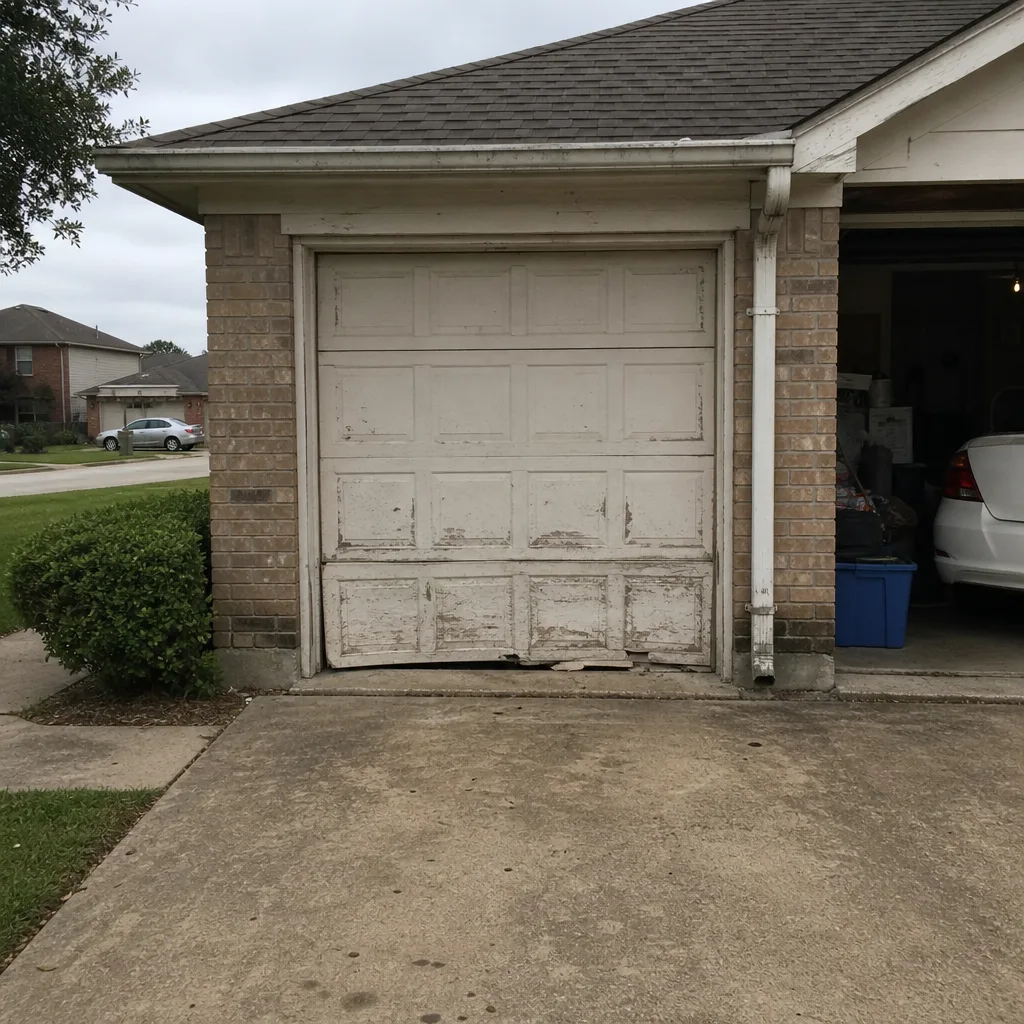 Before
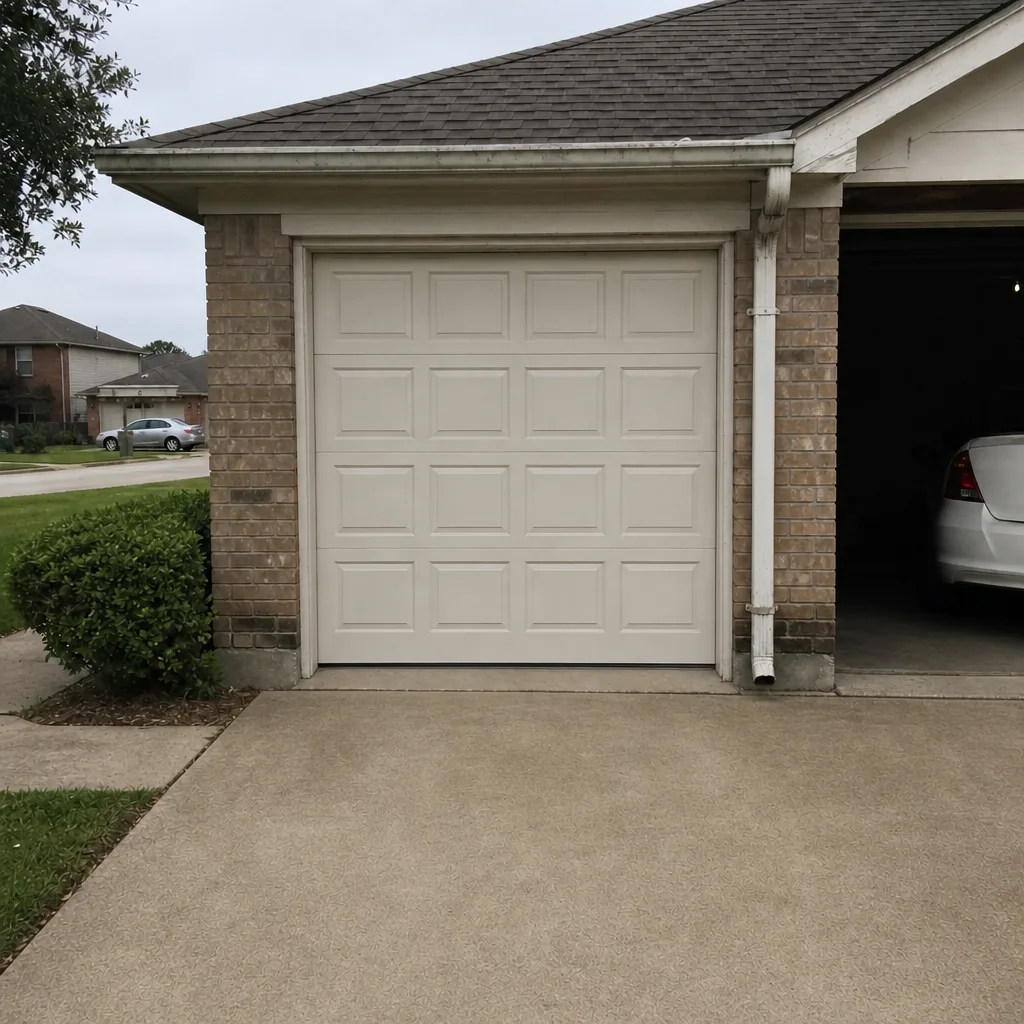 After
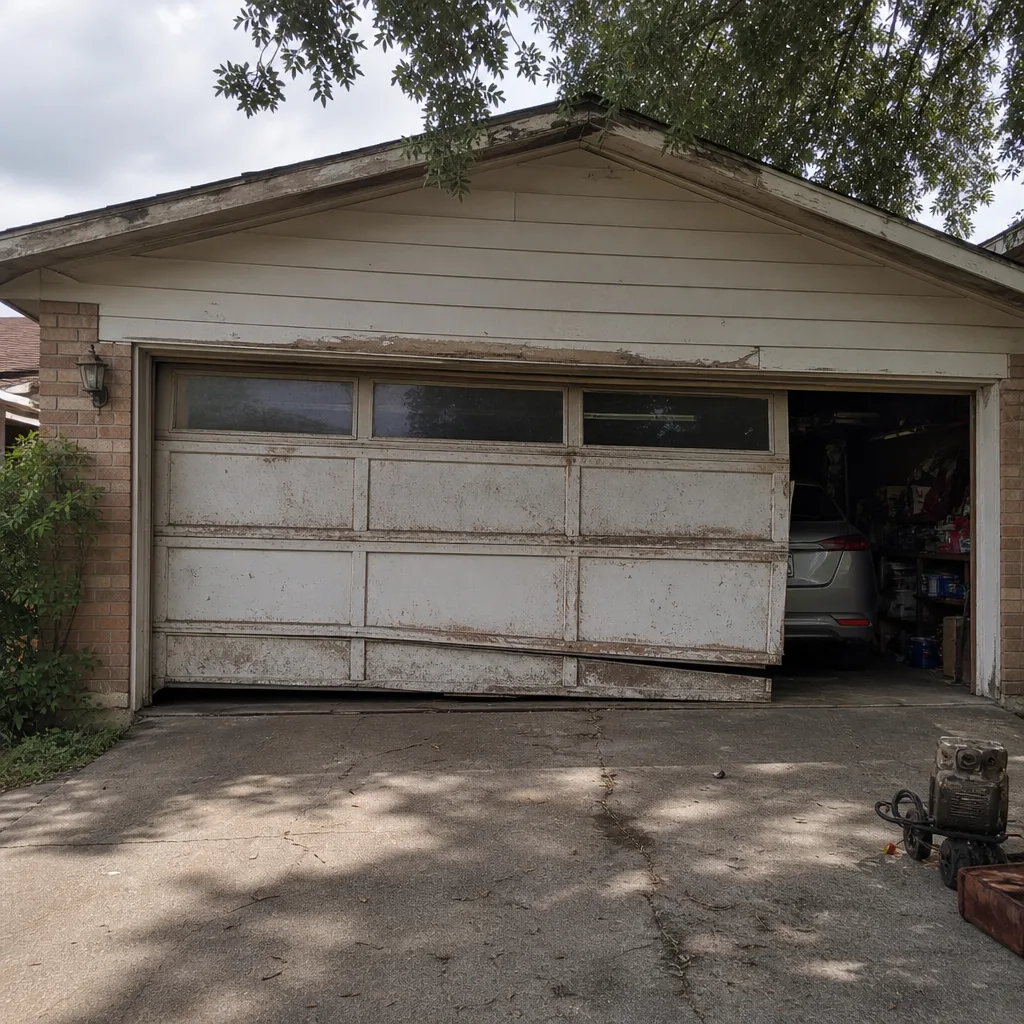 Before
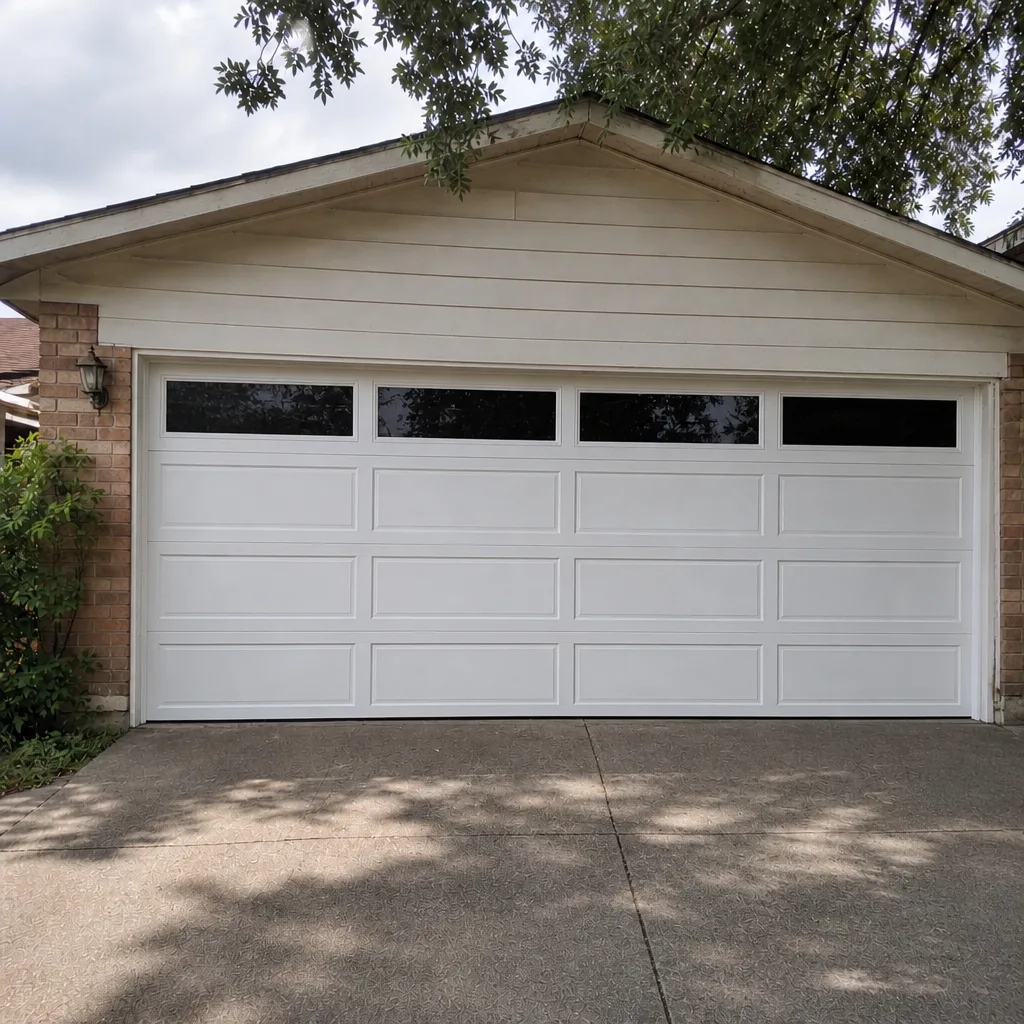 After
When to Call a Professional
Some garage door problems announce themselves and some wait until the worst possible moment. Call a professional when a spring breaks or a cable snaps – that’s a safety issue, not a DIY opportunity. Call when the door reverses for no reason, when it’s dragging on the frame, or when the opener runs but the door doesn’t move. Call when a door has been repaired twice for the same component in a year, because that’s a sign of an underlying problem the surface fix isn’t addressing. And call if you’re honestly not sure – a five-minute phone conversation is cheaper than a bad guess. Pearland Garage Door Repair Co offers free estimates in Pearland – call (855) 337-1579.
Frequently Asked Questions
Most garage door repairs in Pearland in 2026 run $120 to $400, with torsion spring replacement typically $180 to $340 per spring and a matched pair about twice that. The written estimate sets the final number, so get it before work starts. Call (855) 337-1579 for an exact quote – estimates are free.
Same-day service is possible on many repairs, and emergency service is available when a door is stuck or a spring has broken. Availability depends on the day and the job, so the fastest answer is a phone call. Call (855) 337-1579 and we’ll tell you what’s possible.
No – the written estimate is the number you pay. If the technician finds something the initial diagnosis missed, you hear about it before any work proceeds. The quote and the invoice match. Call (855) 337-1579 to schedule a free estimate.
The local professionals we connect you with are licensed and insured as their state requires. We work with vetted garage door specialists, not general handymen. If you have a specific documentation question, ask when you call (855) 337-1579.
Repair is usually cheaper for a single component failure on a sound door, while replacement wins when multiple systems fail within a year on a door past roughly 15 years. A written estimate will tell you which side of the line you’re on. Call (855) 337-1579 for a free assessment.
A higher quote usually reflects a better-grade part, a longer warranty, or flat-rate labor that includes the trip and the testing. Ask what’s included and what kind of part is being used – the answer usually explains the gap. Call (855) 337-1579 and we’ll walk through our estimate line by line.
The Bottom Line
Garage door pricing in Pearland comes down to parts, labor, and the warranty behind the work. Most single-repair jobs land between $120 and $400, spring pairs run roughly $360 to $680, and a new door starts around $1,100 for a single-car opening. The number that counts is the written estimate, and the estimate should be yours before anyone picks up a tool. Repair first, replace only when the math clearly says so. If you’ve been putting off a small repair, the compounding cost is the real risk – worn rollers and a drooping spring are cheaper to fix now than later. For a free estimate in Pearland, call (855) 337-1579 and we’ll give you a straight number for your door.
Written by the team at Pearland Garage Door Repair Co.