Last updated November 21, 2026
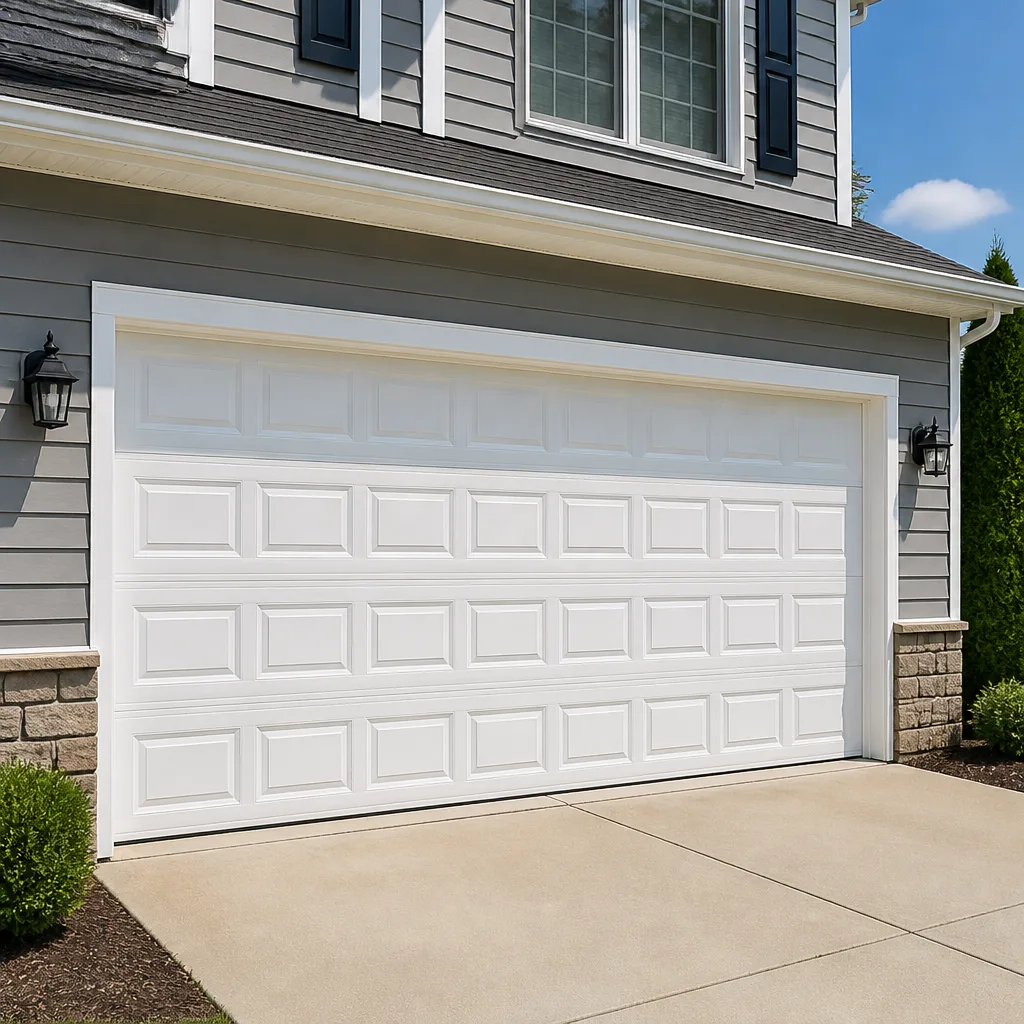 Raised-panel steel
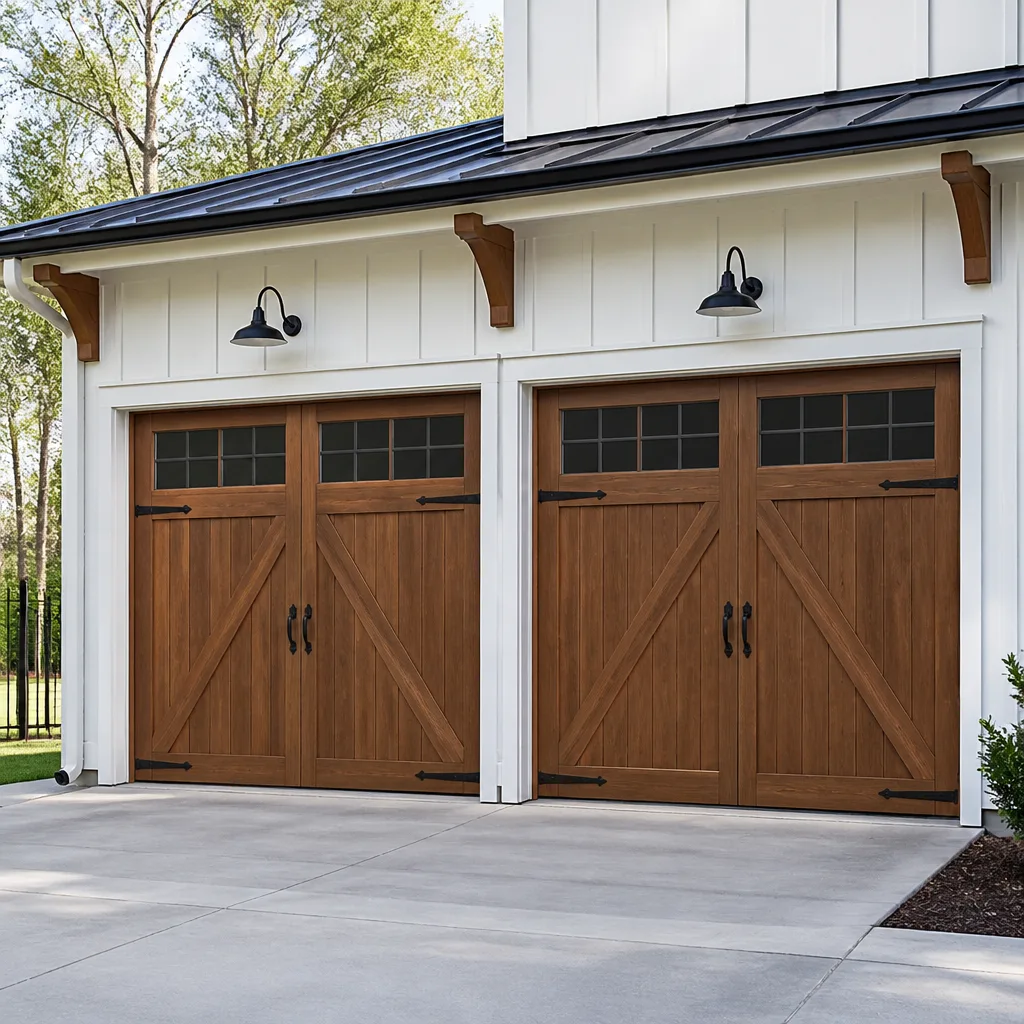 Carriage house
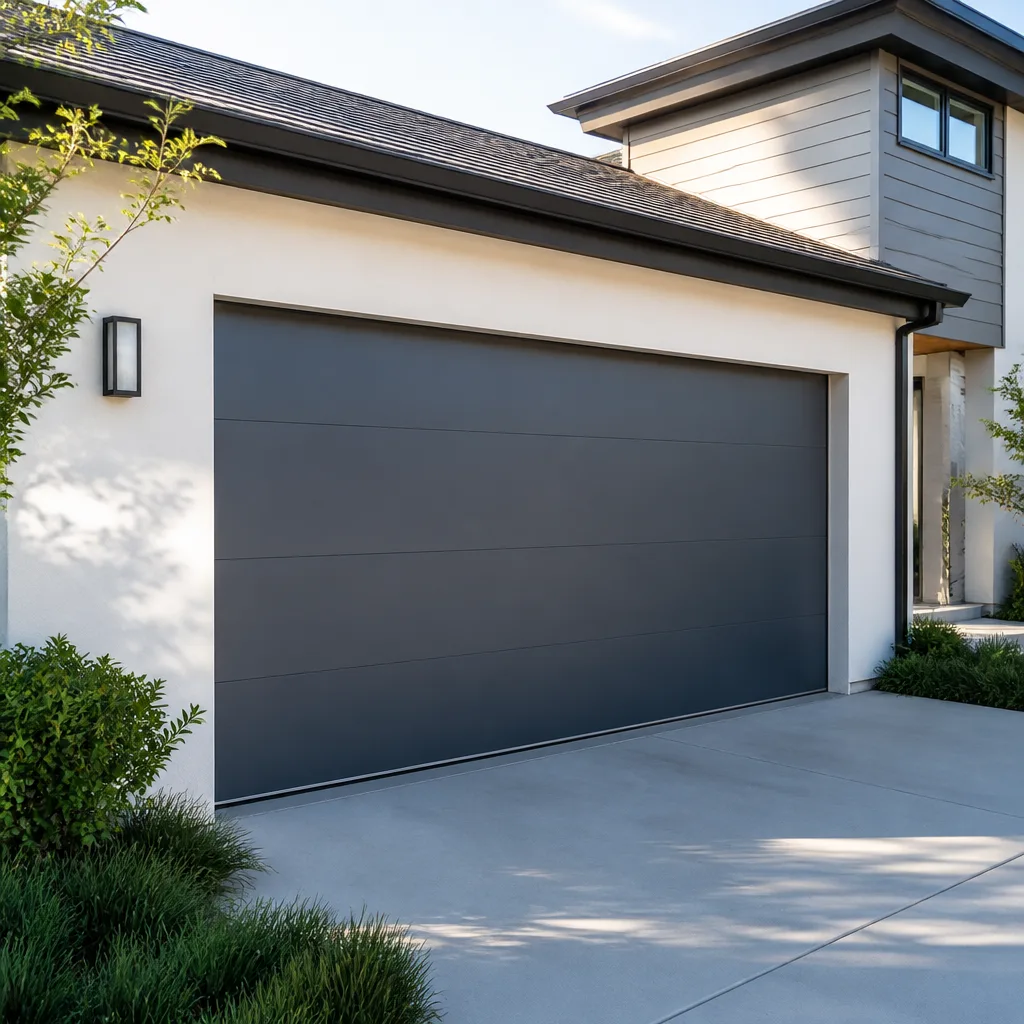 Modern flush
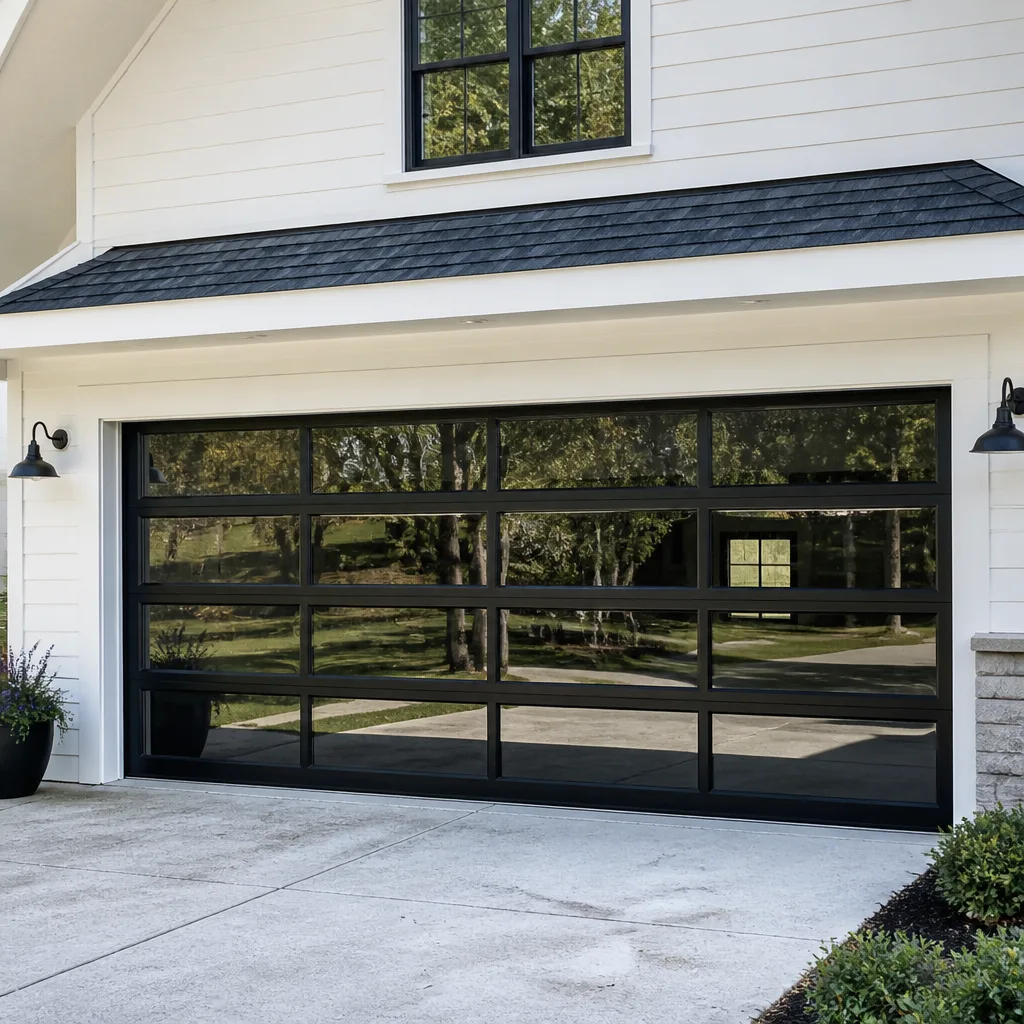 Full-view glass
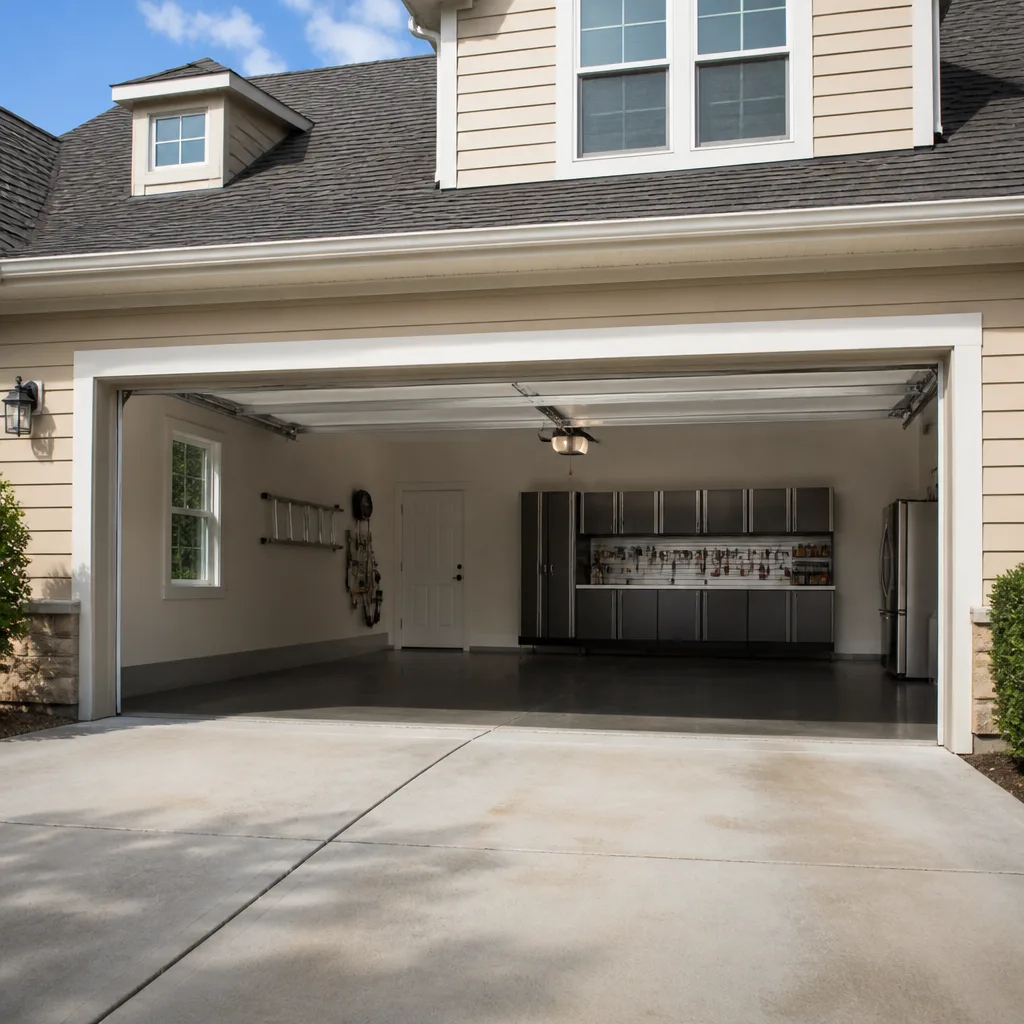 LiftMaster openers
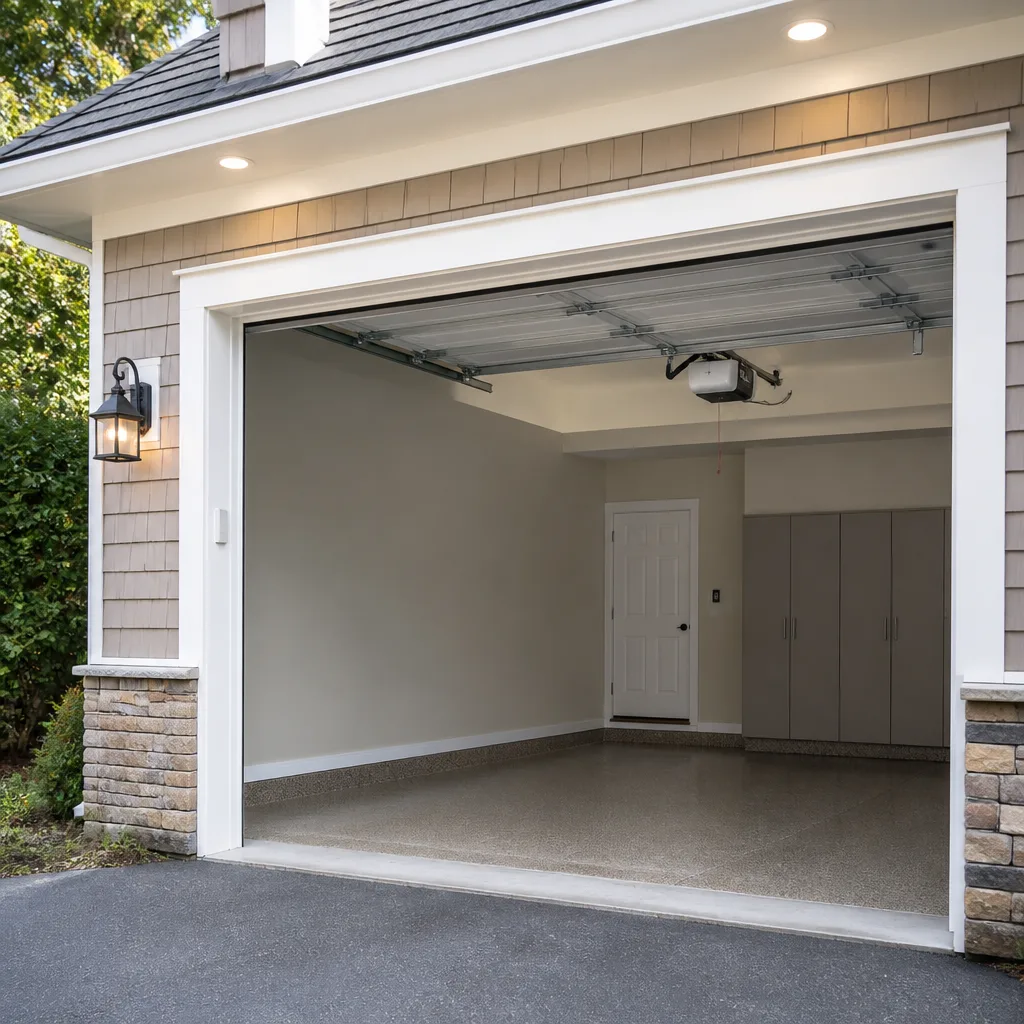 Chamberlain openers
Full 25-point door and opener safety check with every visit - springs, cables, rollers, tracks, and your LiftMaster or Chamberlain opener included
You get a price before we start. It does not change when the pro arrives.
Get your free estimateGarage Door Emergency Preparedness Guide for Pearland Homes
Most garage door advice assumes the problem arrives on a calm afternoon with your phone in your hand and a technician an hour away. Pearland doesn’t always work that way. When a tropical system moves through Brazoria and Harris County, the call volume across the whole metro spikes at once, streets flood, and the technician who would normally reach you in a couple of hours may be three days out. That gap is where preparation matters. A door stuck open during a storm isn’t a scheduling annoyance; it’s an open wall in your house. This guide covers what to do before a named storm, how to release and secure a door when the power dies, when a temporary fix holds and when it doesn’t, and what to document before anyone touches the damage.
Quick Answer
Before a storm, test your manual release, photograph your door and hardware, and leave the release engaged rather than locking it. During an outage, pull the release cord to disconnect the opener and lift the door by hand. After storm damage, document everything with photos and measurements before any repair, and call a garage door specialist for track, panel, and spring issues while a general contractor handles structural framing or roof damage. A stuck-open door can be braced temporarily, but only a professional assessment tells you whether that brace is safe.
Styles & brands we work with
- Raised-panel steel
- Carriage house
- Modern flush
- Full-view glass
- LiftMaster openers
- Chamberlain openers
Table of Contents
- Why Pearland Homes Face a Specific Garage Door Risk
- Pre-Storm Protocol: What to Do Before Landfall
- How to Use the Manual Release on Chamberlain, LiftMaster, Craftsman, and Genie Openers
- How to Temporarily Secure a Stuck-Open Door
- What to Do When the Power Is Out for Days
- Who to Call First After Storm Damage
- What to Document for Your Insurance Claim
- After the Storm: Repair, Adjust, or Replace
Why Pearland Homes Face a Specific Garage Door Risk
Pearland sits in a stretch of Southeast Texas where named storms are a recurring seasonal fact, not a once-in-a-lifetime event. The housing stock reflects it: a large share of Pearland homes were built in the last two decades, which means most garage doors here are insulated steel panels on torsion spring systems with a belt or chain opener mounted to the ceiling. That’s a good setup for daily use. It also means the door is a large, lightweight, flat surface mounted on two tracks, and that is exactly the kind of assembly wind gets under.
What we see after a storm in Pearland usually falls into a few patterns:
- Doors blown off one or both tracks when wind pressure pushes the bottom panel inward and the rollers pop out of the curved track.
- Bent vertical tracks from a panel that shifted and dragged against the rail.
- Broken or slipped torsion springs when someone forces a door that’s already under load, or when the door is cycled repeatedly during an outage.
- Opener logic boards and limit switches damaged by power surges and brownouts as the grid comes back up.
- Water intrusion at the bottom seal that swells panels and rusts hinges over the following weeks.
The reason this matters more in Pearland than in a market where storms are rare is that everyone needs help at the same time. During a heavy storm week, a door that’s off its track isn’t competing with routine tune-ups; it’s competing with hundreds of other storm-damaged doors across the Houston metro. Preparedness is what gets you from “stuck open” to “secure” without waiting for the queue to clear.
Pre-Storm Protocol: What to Do Before Landfall
When a named storm is tracking toward the Texas coast, the window for garage door prep is roughly the 24 to 48 hours before landfall. Do these things in order.
- Test the manual release now, not during the storm. Pull the release cord once, open and close the door by hand to confirm it moves freely, then re-engage the trolley. A release that’s stuck or a trolley that won’t re-engage is something you want to discover on a calm day.
- Photograph the interior and exterior of the door. Full closed door, each panel, the springs, tracks, hinges, rollers, opener head, and wall-mounted control. These photos become the “before” set for any claim.
- Clear the tracks and the floor. Debris in the track during a wind event can jam a door mid-travel and bend hardware. Pull anything stored against the door and clear the threshold.
- Check the bottom seal and weatherstripping. A gapped seal lets wind-driven rain in and, in high wind, lets pressure under the door. Replace worn seals before the season, not after.
- Take valuables and anything water-sensitive out of the garage and raise them off the floor. Garage floors in this part of Texas can take on water quickly.
- Disconnect the opener and leave the manual release engaged (see below for why).
The counterintuitive part: don’t lock the manual release
A lot of storm prep advice says to secure everything, so homeowners naturally want to lock the manual release so the door can’t be moved. That’s backwards. If a panel blows in or a track bends during the storm, the door needs to be movable so you can get it open, get a vehicle out, or get a person through. If the release is locked and the opener has no power, the door is effectively welded shut. Leave the release in the disengaged position so the door can be lifted by hand if you have to.
While you’re at it, if your opener has a vacation lock or a wall control child lock, use it for the opener engagement – not the manual release. That keeps someone from accidentally running the opener during the storm while still letting you move the door by hand.
How to Use the Manual Release on Chamberlain, LiftMaster, Craftsman, and Genie Openers
The manual release disconnects the door from the opener so it can be lifted by hand. On the most common openers in Pearland garages – Chamberlain, LiftMaster, and Craftsman (all part of the same Chamberlain family of designs) and Genie – the release is a cord or lever hanging from the trolley that rides on the rail. The mechanism is similar across all four, but there are a few differences worth knowing.
- Close the door first if it’s partially open. Disconnecting a door mid-travel leaves it unbalanced and hard to control.
- Stand clear of the door and pull the release cord straight down. On Chamberlain, LiftMaster, and Craftsman trolleys, the cord hangs from a spring-loaded lever; a firm downward pull releases the trolley from the carriage. On Genie openers, you may have a red T-handle or a lever arm on the carriage – pull or rotate it per the label on the unit.
- Lift the door slowly by hand to confirm it’s disconnected. If it feels heavy or won’t lift, stop. A door that won’t lift by hand has a spring problem, and you should not force it.
- Prop or tie the door if you’re leaving it open, and lower it gently to close.
- To re-engage, run the opener to bring the carriage back to the trolley, then snap the lever back up or pull the cord per the label. Close the door by hand first, then test the opener with a short cycle.
Two things to keep in mind. First, if your door has a torsion spring system, the door is heavy and the springs are under extreme tension – never reach into the spring assembly or try to adjust it. Second, if the door won’t lift by hand after you release it, the springs are the problem, and that’s a professional job. Our garage door spring repair service exists exactly for this scenario. A door on extension springs behaves differently than a torsion system, but the same rule applies: if it’s heavy, don’t force it.
How to Temporarily Secure a Stuck-Open Door
A door stuck open is a security problem, a weather problem, and, in high wind, a structural problem. You need it closed or blocked until a technician arrives. What you can do depends on why it’s stuck.
If a panel is bent but the door still travels: lower the door slowly by hand, close it, and brace it. Use a 2×4 cut to length, wedged between the door and the header on the inside, or a pair of heavy ratchet straps from the door’s hinges to a wall anchor on each side. This keeps the door from being lifted from outside.
If the door is off its track: do not try to force it back on. Get it closed as far as it will go without resistance, then brace it and call for service. Forcing a panel back onto a bent track can bend the panel and damage the opener.
If the door won’t close at all: cover the opening with a sheet of plywood screwed to the framing across the doorway, or use a heavy tarp over the opening, weighted and strapped inside and out. That gets you through a night, not a week.
When is a temporary fix structurally adequate? When the door is intact, the springs and cables are undamaged, the brace is anchored into framing (not drywall), and the fix is meant to hold for a day or two. When isn’t it? When panels are buckled, the tracks are bent, a cable is loose or kinked, or the door is sitting crooked in the opening. Any of those is a sign the door has lost structural integrity, and a brace can fail under wind or a person leaning on it. That’s a call-a-specialist situation.
What to Do When the Power Is Out for Days
Multi-day outages are a real pattern after a major storm in the Pearland area, and the garage door is one of the first things people need back because it’s how they get a vehicle in and out. Here’s how to handle it.
- Run the door by hand. With the release engaged, a properly balanced door should lift with one hand. If it takes two hands and effort, don’t keep cycling it – call for service.
- Don’t run the opener on a generator unless the opener is rated for it. Surges from small generators and from the grid coming back online are a common cause of fried logic boards on Chamberlain, LiftMaster, Genie, and Craftsman units. If your opener keeps tripping after the power comes back, that’s usually a board, not the door.
- Watch for a door that closes itself. A door that drifts down after you let go has a spring or balance problem. Don’t leave it open and unattended.
- Test the safety reverse after power returns. Modern openers rely on the safety sensors at the bottom of the tracks. Clean the lenses, check the alignment, and confirm the door reverses when you break the beam with a box or a broom.
- Check the battery backup if your opener has one. LiftMaster and Chamberlain models with a battery backup will run a limited number of cycles after power drops. Once the battery is drained, treat the opener as dead until power returns.
If the opener itself is failing after the storm – lights on but no travel, remote works but the wall control doesn’t, door goes a foot and stops – that’s opener repair, not door repair, and our garage door opener repair team handles LiftMaster, Chamberlain, Genie, Craftsman, and Raynor systems routinely. We work on the brand you already have, which usually means repair first rather than replacing a whole system over one board.
Who to Call First After Storm Damage
The sequencing question after a storm is real: do you call a garage door specialist, a general contractor, a roofer, or all three? The answer depends on what’s damaged.
Call a garage door specialist first when:
- The door is off its track, skewed in the opening, or won’t close.
- A panel is bent, cracked, or separated from the frame.
- A spring or cable has broken, or the door is too heavy to lift by hand.
- The opener runs but the door doesn’t move, or the opener board is unresponsive after power was restored.
- The door is stuck open and you need it secured and operational.
Call a general contractor or structural professional first when:
- The wall around the garage opening is cracked, displaced, or out of square.
- The header above the door is sagging or the framing is visibly damaged.
- The roof is compromised and water is coming into the garage from above.
In practice, a lot of storm damage in Pearland involves both, and they’re handled in sequence. Get the structure sorted first; a door that’s hung on a damaged frame won’t stay adjusted no matter how many times it’s fixed. If you’re not sure, get an estimate from a garage door specialist who works on your door’s brand and ask them to tell you if the problem is in the door or in the frame. Amarr and Wayne Dalton doors are common in newer Pearland subdivisions, and a specialist who services those brands will know what a properly hung door looks like in that system.
Emergency work is a real category for us, not an upsell. When a door is stuck open or a vehicle is trapped, we’ll tell you honestly what’s available – we won’t promise a specific arrival window we can’t meet during a storm event. If you have a non-emergency repair, scheduling it for the next available weekday morning is usually faster than waiting behind emergency calls.
What to Document for Your Insurance Claim
Documentation is the part homeowners skip, and it’s the part that gets a claim paid. Take photos before anything is moved, repaired, or cleaned. Adjusters see the difference between a documented storm loss and an undocumented one.
- Photograph the full door from the outside and the inside, closed and open, with a wide shot that includes the surrounding wall and driveway.
- Photograph each panel individually, including any dents, punctures, separating seams, or water staining.
- Photograph the hardware: springs, cables, drums, hinges, rollers, and the tracks.
- Photograph the opener unit, the rail, and the wall control, plus the opener’s model sticker.
- Measure and record the door’s width and height, and note the panel count. A replacement quote needs these, and an adjuster uses them to match your door.
- Note the brand and model of the door and the opener if there’s a sticker on the door or the opener housing. Clopay, Amarr, Wayne Dalton, and Raynor doors all have identifying labels.
- Write down what you observed and when: when you noticed the damage, what the door’s condition was before the storm, and whether it moved or operated after. Don’t estimate.
Keep the broken parts until the claim is settled. A spring or track that a technician replaces is evidence. Once the adjuster has signed off, you can dispose of it.
One caveat: never describe the door as unrepairable or specify a dollar figure in your claim notes unless a technician has written an estimate. Your insurer wants a statement of facts from a trained inspector, not a homeowner’s guess. We can provide a written assessment for a claim like this.
After the Storm: Repair, Adjust, or Replace
Once the immediate emergency is over, the question shifts to what the door actually needs. In our experience after storm events in Pearland, the answer is often less than homeowners expect. A door that looks mangled from the inside frequently needs a panel set, track straightening, and a rebalance rather than a whole new door.
Here’s the general triage:
- Adjust and repair when the door panels are intact, the track is bent but not crushed, and the springs and cables are sound. This is the common case for a door that was pushed off track but not blown in.
- Replace a panel set when one or two panels are bent beyond straightening. On Clopay and Amarr doors, panels are usually replaceable individually, and that’s cheaper than a whole door.
- Replace the door when multiple panels are compromised, the door is out of manufacture, or the cost of panel and hardware replacement approaches a new door.
- Replace the opener when the board or motor is dead after a surge. If the door itself is fine, there’s no reason to replace it.
Our approach is repair first, replace only when it makes sense. A full lifecycle of service means we can take a door from emergency brace through panel replacement, spring and opener repair, and eventually a new door – all with the same specialist. If the storm pushed you into a decision you weren’t planning on this year, start with an assessment. When you’re ready for scheduled work, our garage door repair service handles most of the post-storm cases we see, and a Pearland garage door specialist can walk you through the options before you commit. You’ll always know what the price is before any work starts, in writing.
Common Mistakes to Avoid
- Locking the manual release before a storm. This turns your door into a fixed wall. If a panel blows in or the opener loses power, you can’t open the door by hand. Leave it disengaged.
- Testing a door by forcing it. If a door won’t lift by hand after release, the springs are the problem. Forcing it can strip the opener gear or damage the door – call for service instead.
- Using a temporary brace on a bent track. A 2×4 jammed against a door sitting crooked in a bent track can fail under wind or weight. That’s a professional inspection situation.
- Waiting until the storm is on the radar to schedule service. Pearland homeowners who schedule a spring or opener repair a week before landfall get same-week appointments. The day before, they don’t.
- Skipping the “before” photos. Without photos of the door and hardware pre-storm, adjusters can’t tell storm damage from wear. Take them at the start of every season.
- Replacing the whole door because the opener failed. These are separate systems. A door that’s in good condition with a failed opener needs an opener repair, not a new door.
- Running the opener on a generator without checking the rating. Surges are a leading cause of dead logic boards after a storm. If you’re not sure, use the door by hand until the grid is stable.
See the difference
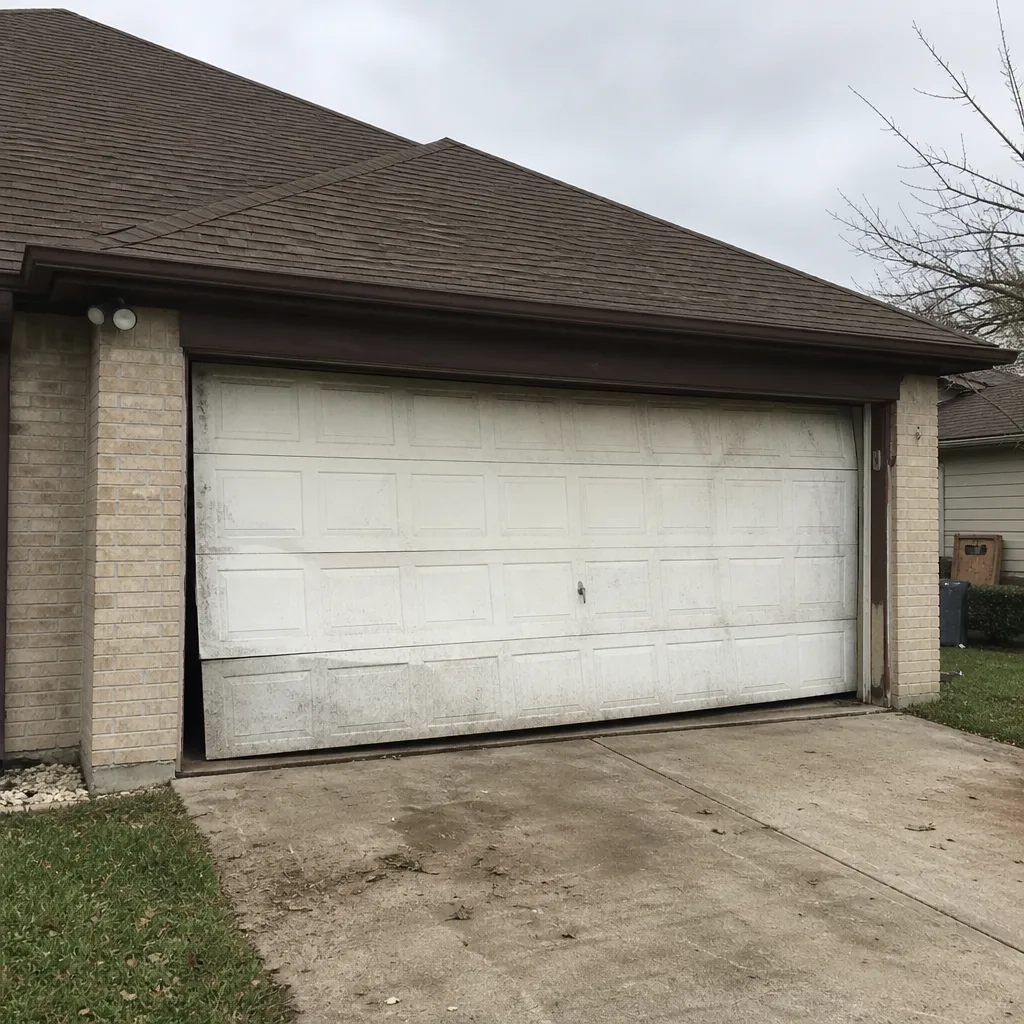 Before
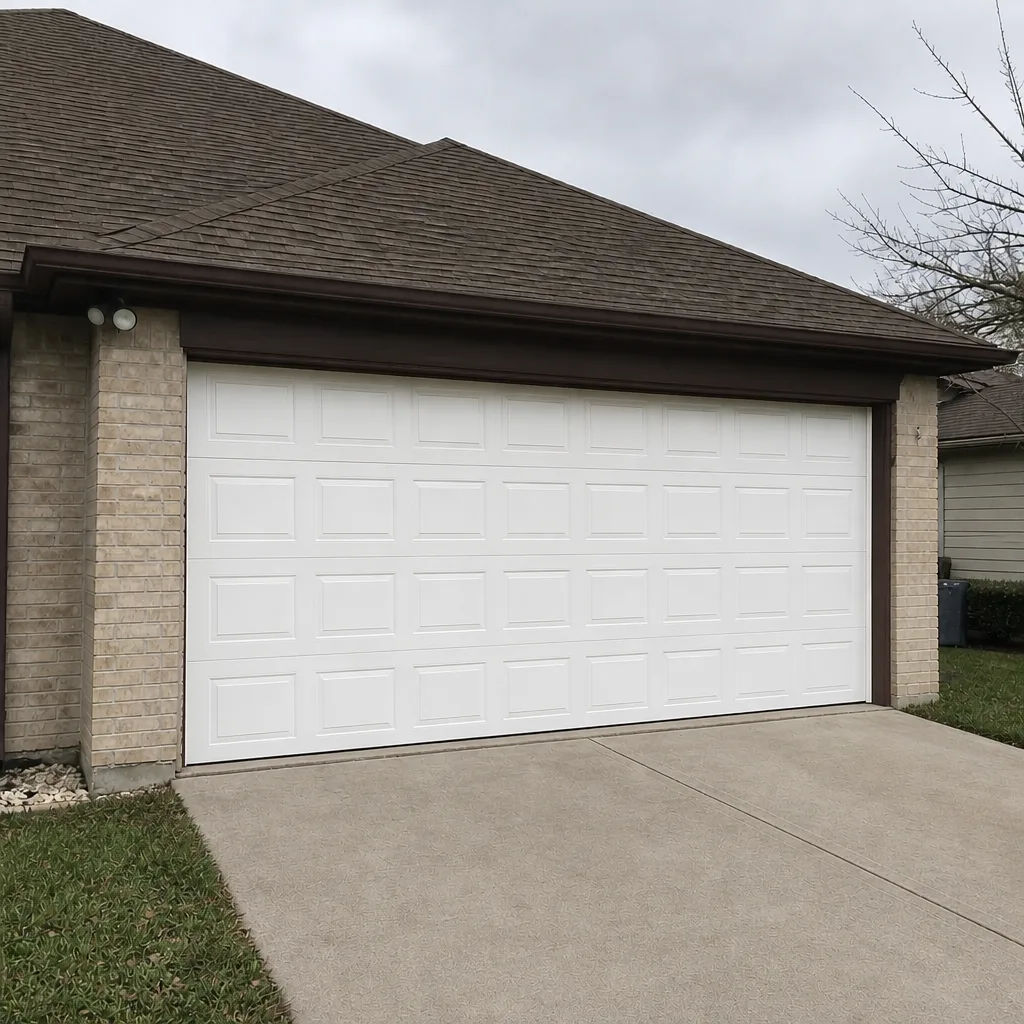 After
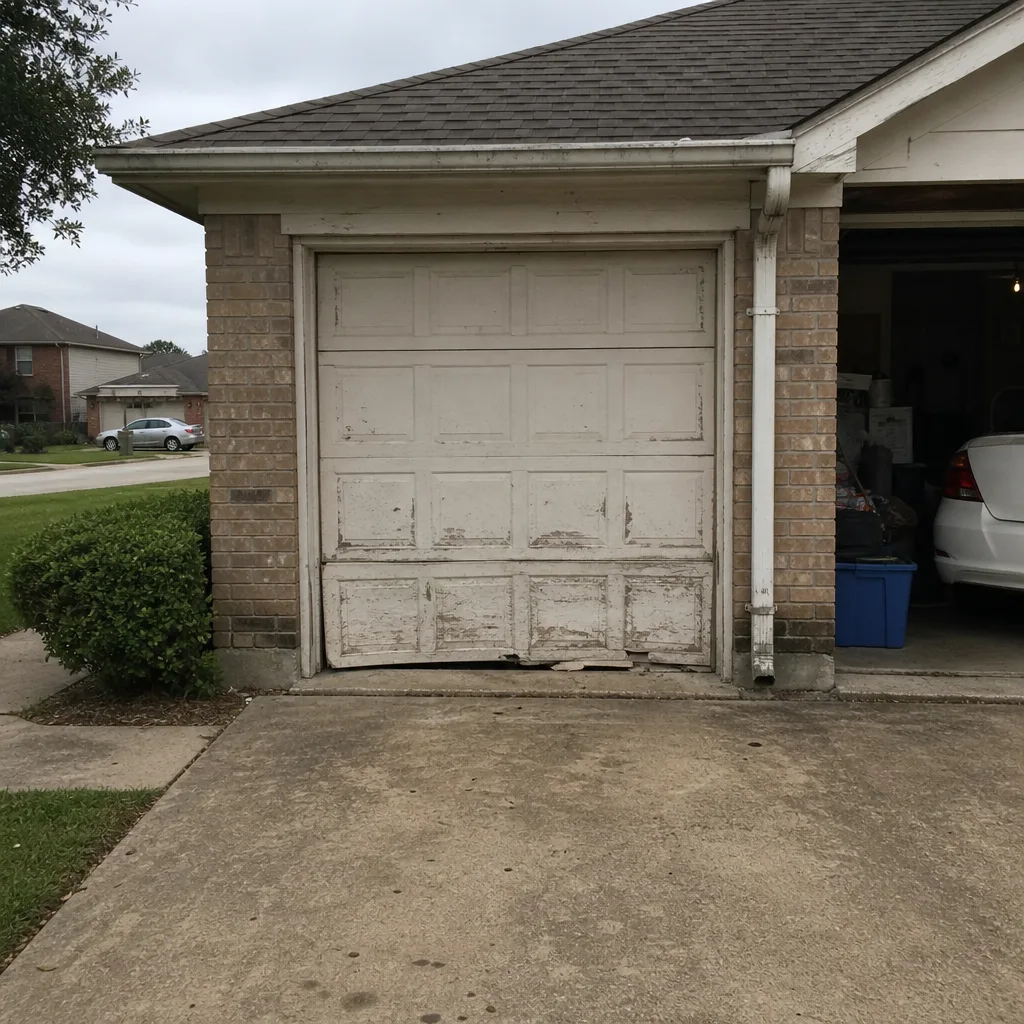 Before
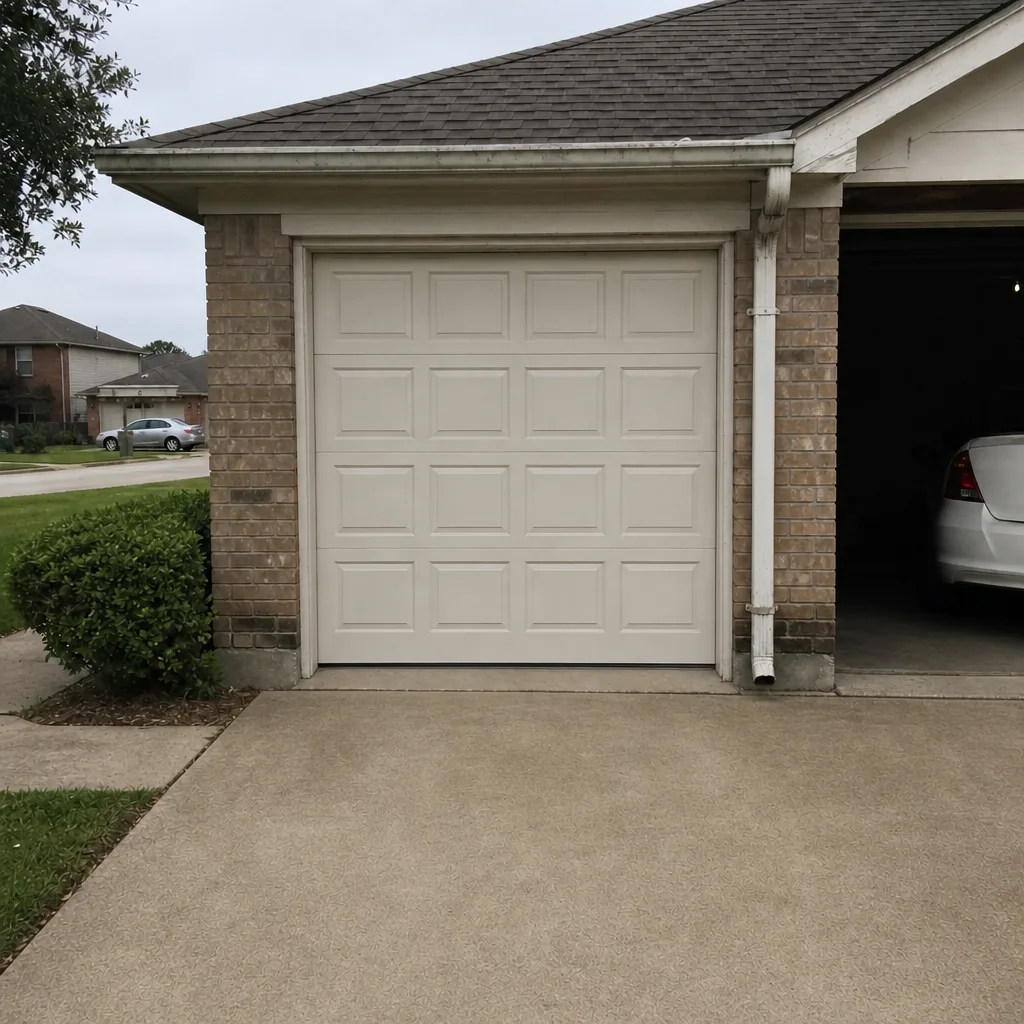 After
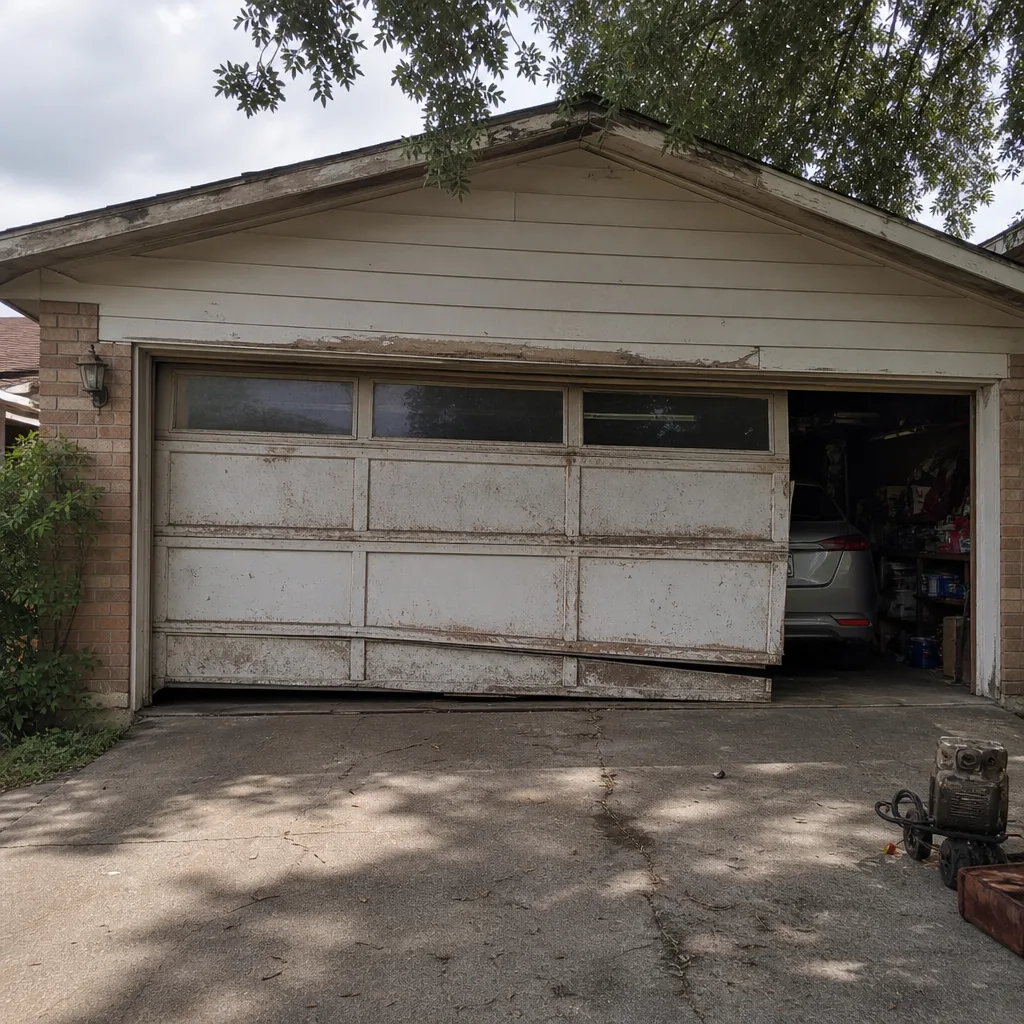 Before
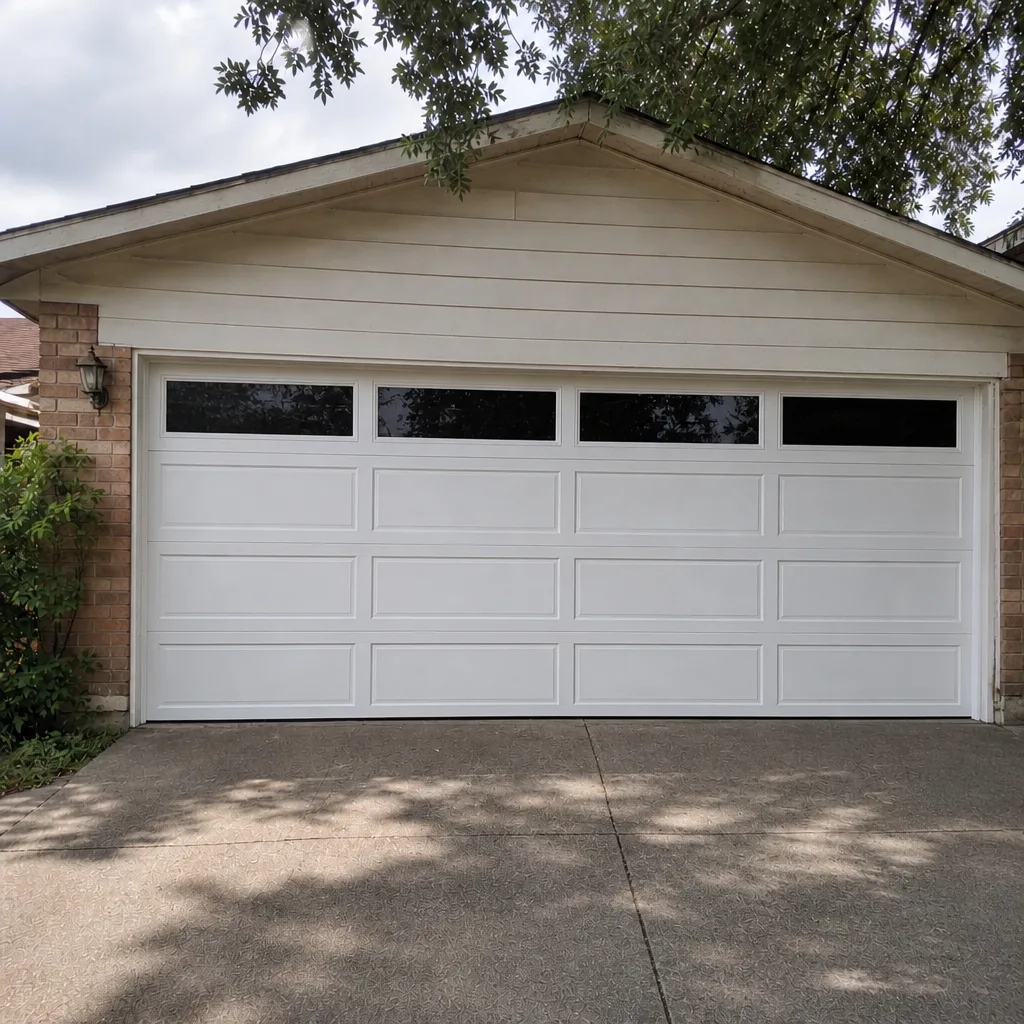 After
When to Call a Professional
Call a garage door specialist when the door is off its track, a panel is bent or separating, a spring or cable is broken, the opener doesn’t respond after a power cycle, or the door is stuck open and you can’t secure it safely. Springs are under extreme tension, and a door that won’t lift by hand is a job for someone with the right tools and training – not a homeowner with a wrench. Pearland Garage Door Repair Co offers free estimates in Pearland – call (855) 337-1579. We work on LiftMaster, Chamberlain, Genie, Clopay, Amarr, Wayne Dalton, Craftsman, and Raynor systems, and we’ll tell you whether you’re looking at a repair or a replacement before anything gets ordered.
Frequently Asked Questions
Pull the manual release cord hanging from the trolley to disconnect the door from the opener, then lift the door by hand. On Chamberlain, LiftMaster, and Craftsman openers, pull the cord straight down to release the lever; on Genie, use the red T-handle or lever on the carriage. If the door won’t lift easily by hand, stop and call for service – the springs are the problem. Call (855) 337-1579 if you’re not sure.
Yes, if the door is intact and the tracks and springs are undamaged. Close the door as far as it will go by hand and brace it with a 2×4 against the header or heavy ratchet straps anchored to the walls, or cover the opening with plywood screwed into the framing. Get professional help if panels are buckled, cables are kinked, or the door sits crooked in the opening.
Call a garage door specialist first if the door itself is off track, bent, missing a panel, or stuck open, or if the opener has failed. Call a general contractor first if the wall, header, or framing around the opening is cracked, sagging, or out of square. Get the structure fixed before the door is re-hung.
Photograph the full door inside and out, each panel, the hardware including springs and tracks, and the opener’s model label. Measure the door’s width and height, note the brand and panel count, and write down when you noticed the damage and what condition the door was in before the storm. Keep replaced parts until the claim is settled, and request a written assessment from the technician for the adjuster.
Because a disengaged release is what lets you move the door by hand if the opener loses power or the door is damaged mid-storm. Locking the release leaves the door fixed in place with no manual control, which can trap a vehicle or a person inside or leave an open doorway impossible to close.
During normal conditions, many repairs can be handled quickly, and emergency service is a real offering for a door that’s stuck open or a vehicle trapped. During and immediately after a major storm, call volume across the Pearland area makes exact response windows unpredictable, and we won’t promise an arrival time we can’t meet. Call (855) 337-1579 for a free estimate and honest guidance on timing; the price is quoted and agreed before any work starts.
The Bottom Line
The garage door emergency that catches Pearland homeowners isn’t the one that happens on a quiet afternoon. It’s the one that happens during or right after a tropical system, when no technician can reach you quickly and the door is stuck open or jammed shut. The preparation is simple: test and leave the manual release engaged, photograph everything before the season starts, know how to brace an intact door and when not to, and document damage before you touch it. Repair first, replace only when it makes sense, and always work with a specialist who knows your door’s brand. When it’s time for help, call a professional – and know the price before any work starts.
Written by the team at Pearland Garage Door Repair Co.