Last updated November 21, 2026
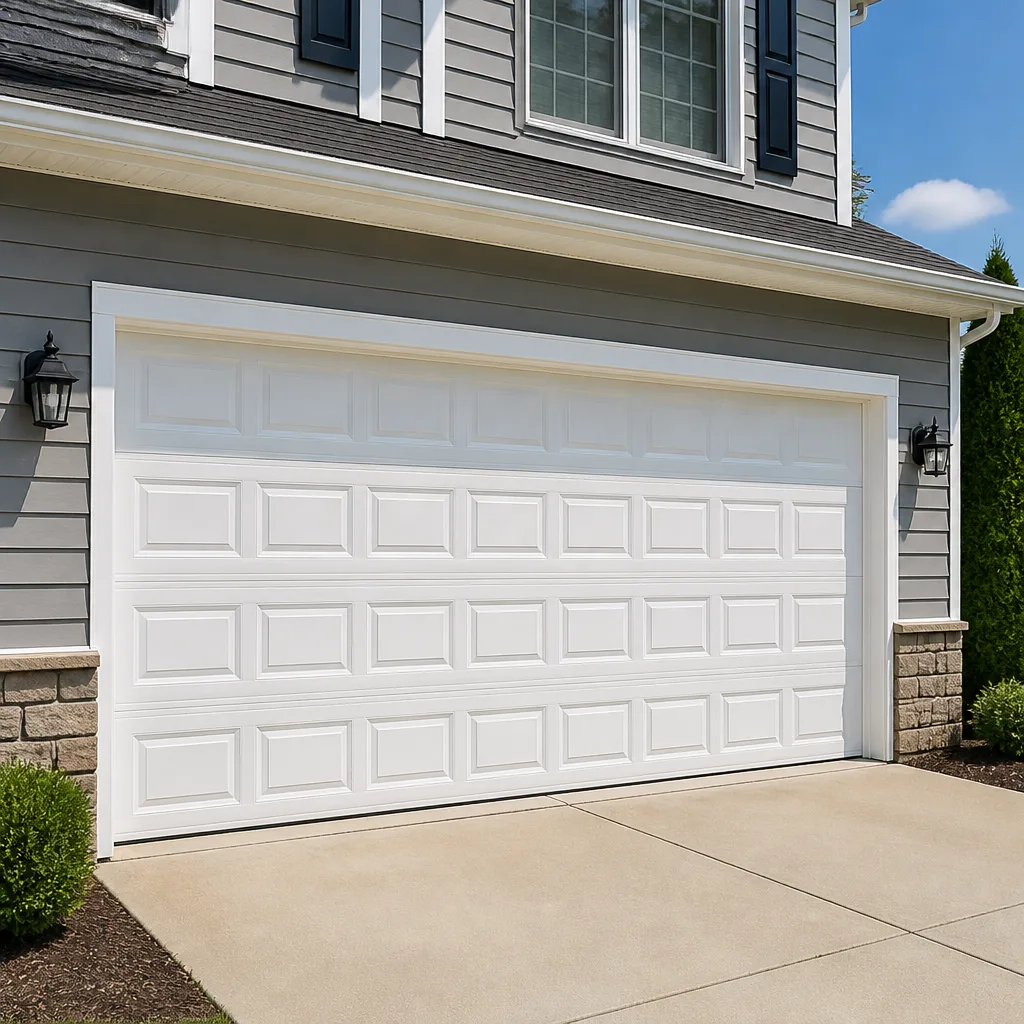 Raised-panel steel
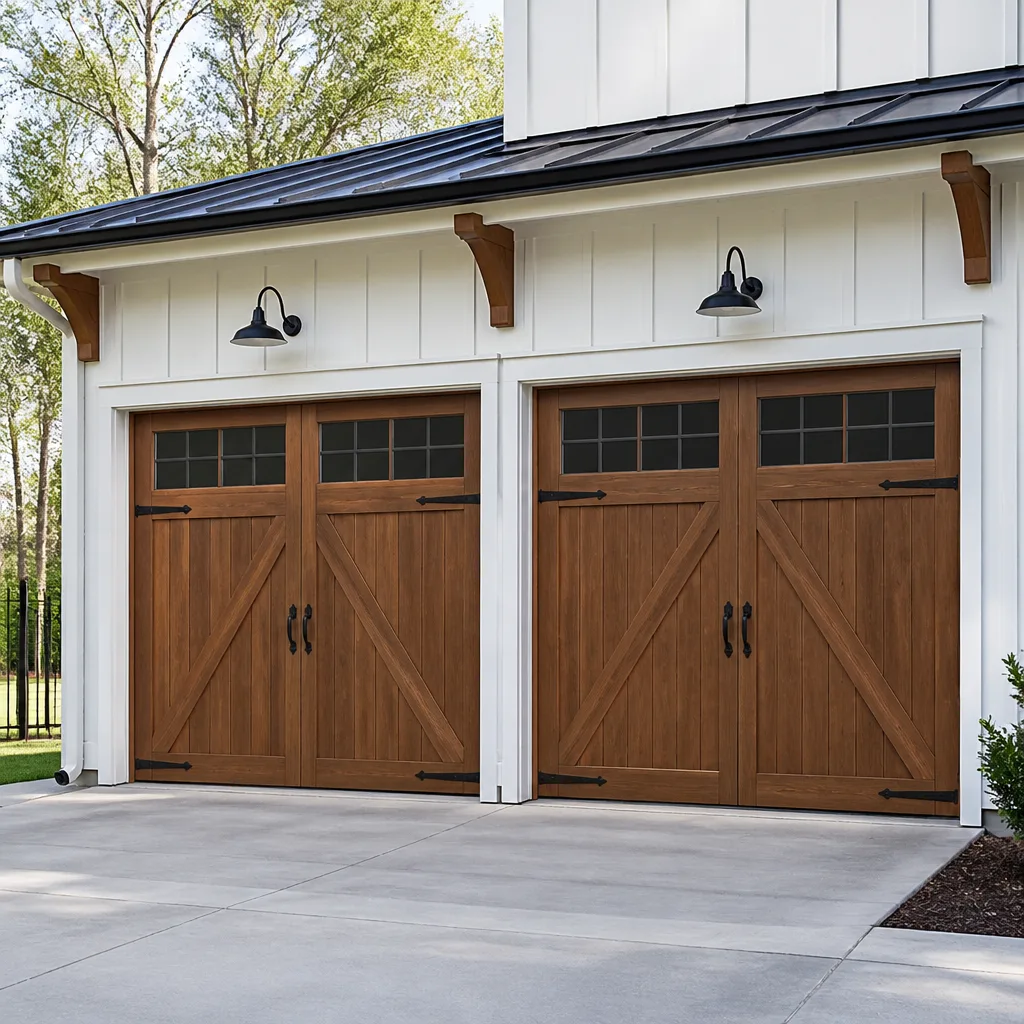 Carriage house
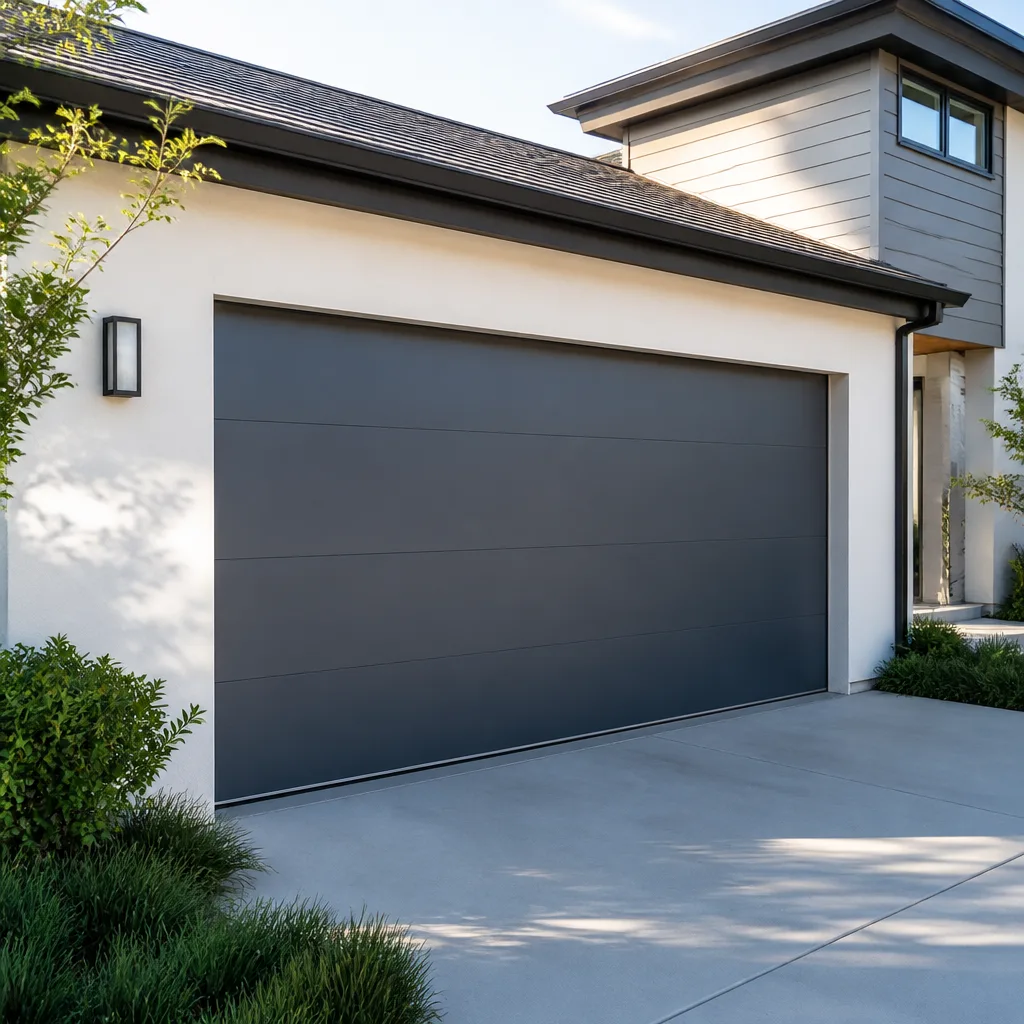 Modern flush
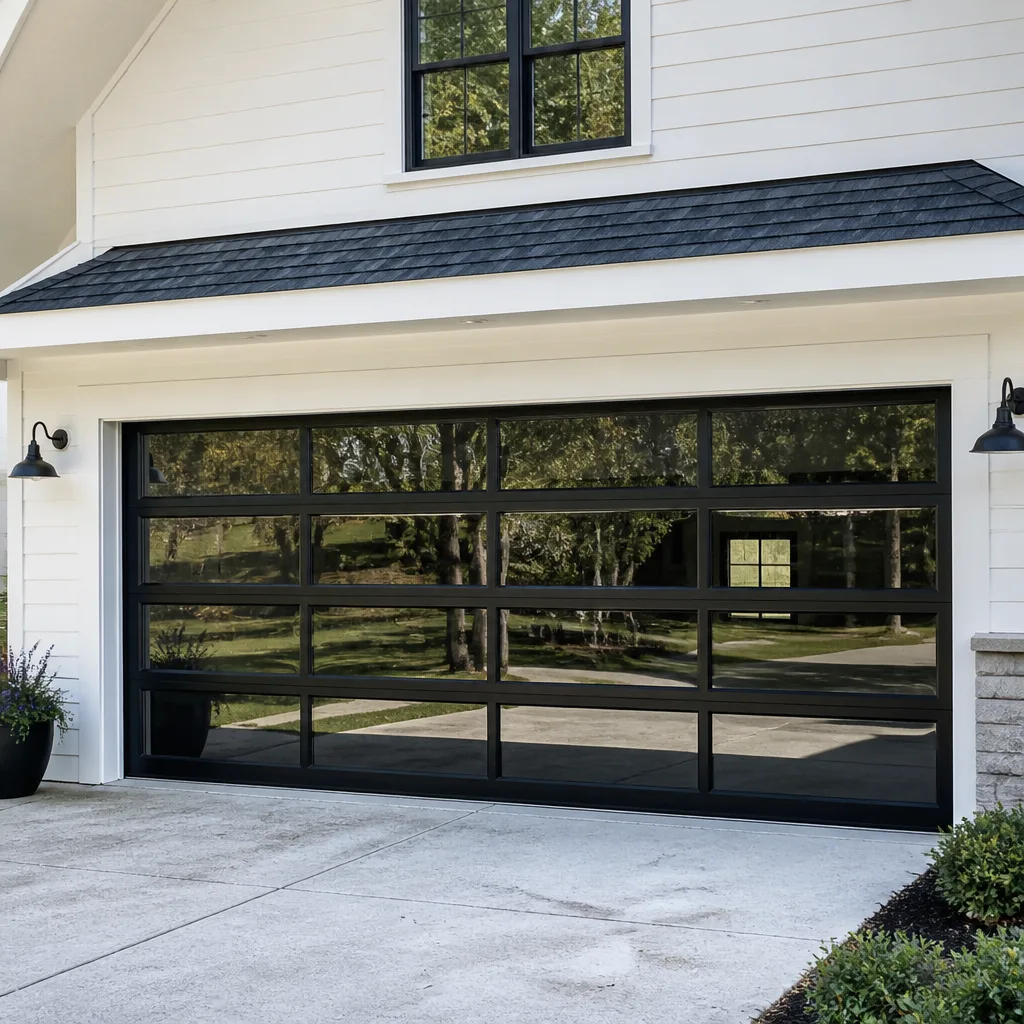 Full-view glass
 LiftMaster openers
 Chamberlain openers
Full 25-point door and opener safety check with every visit - springs, cables, rollers, tracks, and your LiftMaster or Chamberlain opener included
You get a price before we start. It does not change when the pro arrives.
Get your free estimateThe Complete Guide to Garage Doors in Pearland
Most garage door advice you’ll find online was written for a colder, drier climate than ours and then copied onto every city page in the country. That matters more than you’d think. The garage doors on Pearland’s boom-era homes built between roughly 2000 and 2015 are now reaching the age where springs, cables and bottom seals tend to fail together, not one at a time, and the reason is specific to this place: humidity, shifting clay soil, and tract-built framing that moves. Treating one failed part as an isolated problem usually buys you a second repair a few months later. This guide explains how a Pearland door actually wears out, how to read what it’s telling you, and how to tell a repair that holds from one that just postpones the job.
Quick Answer
A garage door in Pearland wears out faster than the same door would inland because Gulf Coast humidity corrodes springs and hardware while shrink-swell clay soil shifts the frame the door hangs on. The result is that alignment drift, seal failure and spring fatigue show up together on homes built between 2000 and 2015. Look at the door as a system – frame, springs, cables, seals and opener – not a list of separate parts, and repair the cause rather than only the symptom.
Styles & brands we work with
- Raised-panel steel
- Carriage house
- Modern flush
- Full-view glass
- LiftMaster openers
- Chamberlain openers
Table of Contents
- Why Pearland Garage Doors Wear Differently
- Clay Soil, Foundation Movement and Door Alignment
- How Humidity Affects Springs and Hardware
- The Brands Pearland Builders Installed and Their Weak Points
- How to Read Your Garage Door from the Outside
- Repair That Buys Two Years vs. a Repair That Solves It
- A Maintenance Routine for Pearland Homeowners
- What Garage Door Work Typically Costs in Pearland
Why Pearland Garage Doors Wear Differently
Pearland sits in a humid subtropical pocket: warm, wet air most of the year, mild winters, and soil that holds water and then releases it slowly. Those two facts shape almost every garage door failure we see here. A door that hangs perfectly in a dry climate can still drift out of alignment in Pearland because the slab and framing it’s anchored to are moving underneath it. The hardware bolted to that framing takes the stress.
There’s a second factor that’s easy to overlook: how Pearland grew. The city expanded fast through the 2000s and early 2010s, which means thousands of homes went up in the same handful of subdivisions on the same construction timeline. Doors and openers installed in that window are now all entering their failure years at roughly the same time. It’s not that Pearland doors are worse than anyone else’s. It’s that a large share of them are aging on the same schedule.
What that means for you as a homeowner:
- Failures cluster. Springs, cables and bottom seals on a 15- to 25-year-old door tend to need attention within a short span of each other.
- Alignment drift is common. Doors that ran smooth for a decade start rubbing, binding or stalling at one height.
- Seals go soft before they tear. The rubber between the door and the floor hardens unevenly in humidity, so you get drafts and water intrusion before you see visible damage.
- Openers outlast the door. Motors keep running while the door’s mechanical parts are the thing actually failing, which sends people shopping for a new opener when they need a spring.
When you understand the whole system, repair decisions get simpler. That’s the lens for the rest of this guide.
Clay Soil, Foundation Movement and Door Alignment
Pearland’s soil is heavy on clay, and clay does one thing extremely well: it expands when it soaks up water and shrinks as it dries. That cycle repeats all year here, and every cycle nudges the slab and framing a fraction. A fraction doesn’t sound like much until you consider that a garage door has to travel a specific path, top to bottom, with only a small tolerance for deviation. Push the frame a quarter inch out of line and the door starts telling you about it.
Here’s what structural drift looks like versus a mechanical fault:
- Structural drift signs: the door looks visibly crooked when closed, one side sits higher than the other, the door rubs against the same jamb every time, or the gap along the top or bottom is uneven across the width.
- Mechanical signs: the door is aligned but the opener strains, the door is heavy to lift by hand, springs look stretched or broken, or you hear a snap followed by the door refusing to move.
In our experience the two overlap more often than not in Pearland. A door that slipped slightly out of alignment puts uneven load on the torsion springs, which shortens their life, which then makes the opener work harder. Nobody notices because the change is gradual. Then one morning it stops halfway and it looks like a sudden failure when it’s really been building for a year or two.
A trained technician checks alignment against the track and frame before doing anything to the springs. If the tracks are out of plumb, replacing a spring only restores the symptom. That’s why garage door repair in a clay-soil market starts with a straight edge and a level, not a parts list.
How Humidity Affects Springs and Hardware
Garage door torsion and extension springs are steel under constant tension. Steel plus moisture equals corrosion, and Pearland has moisture to spare most of the year. The humidity corridor that runs between Pearland and the Ship Channel keeps airborne moisture high enough that springs and hinges corrode noticeably faster than they would in a drier inland Texas city. Corrosion weakens the spring from the inside, and a weakened spring is a spring that’s closer to snapping than its age suggests.
What actually accelerates it:
- Poor garage ventilation. A closed-up garage traps damp air, and springs sit in that environment year-round.
- Sweating hardware. Hinges, rollers and brackets collect condensation during temperature swings and rust at the pivots.
- Soft or failing seals. A worn bottom seal lets humid air and occasional splash-in creep under the door and sit against the bottom fixtures.
- Lack of lubrication. A dry spring, hinge or roller corrodes faster than a lightly lubricated one.
You can slow this down without any special tools. Keep the garage as dry as you reasonably can, keep the bottom seal intact so moisture doesn’t pool at the door line, and have the moving parts lubricated as part of regular upkeep. None of that stops corrosion entirely, but it stretches the service life of springs and hardware in a way that’s worth the effort.
A safety point that isn’t negotiable: garage door springs are under extreme tension. A torsion spring can hold enough stored energy to cause serious injury in an instant, and the tool that safely unwinds one is not a tool most homeowners own. Never try to remove, adjust or unwind a spring yourself. This is the one part of a garage door where calling a trained professional isn’t caution, it’s the whole point of the trade. Spring work is a specialty, and it’s why we handle garage door spring repair as its own dedicated service rather than folding it into general repair.
The Brands Pearland Builders Installed and Their Weak Points
Walk through the subdivisions that went up during Pearland’s growth years – Silverlake, Shadow Creek Ranch, Southern Trails, Riverstone Ranch and the neighborhoods around them – and you’ll see a familiar set of door and opener brands. The volume builders who put up most of that housing, including D.R. Horton and Perry Homes, installed equipment from a small group of manufacturers. Clopay and Amarr doors are extremely common on those homes, and Wayne Dalton shows up frequently too, often paired with a Craftsman or LiftMaster opener. Knowing what’s on the house changes what a technician checks first.
General weak points by brand family, based on what tends to need attention:
- Clopay steel doors: sturdy panels, but the torsion springs on tract-installed units are typically rated for a standard cycle count, and doors used as a primary entry get cycled far more than that rating assumes.
- Amarr doors: common on builder-grade installs; bottom seals and hinge screws are the usual first wear points, and mixed hardware sets sometimes ship from the factory.
- Wayne Dalton doors: some models use proprietary spring and hardware configurations, which is exactly the situation where a generalist guessing at parts costs you time. We service the brand you already have so you’re not pushed into replacing hardware that just needs the right part.
- Craftsman openers: reliable motors, but the drive gear and logic board are the common failure points on older units, and both are repairable without replacing the whole opener.
We work on eight leading brands – LiftMaster, Chamberlain, Genie, Clopay, Amarr, Wayne Dalton, Craftsman and Raynor – which covers virtually any door or opener system a Pearland homeowner is likely to already have. That brand familiarity is the whole reason to call a specialist. When only the opener is at fault, repairing it keeps you from paying for a full door system you didn’t need. Our garage door opener repair covers the smart and traditional openers those builders installed.
How to Read Your Garage Door from the Outside
You don’t need tools to spot most garage door problems in Pearland. A two-minute look from the driveway tells you a lot about whether you’re dealing with something mechanical, something structural, or something weather-related. Here’s the routine we’d suggest walking through:
- Step back and look at the closed door as a whole. Is the gap along the top even across the full width? Is the bottom line parallel to the driveway? If one side sits higher, you have alignment drift, which points to the frame or track rather than the springs.
- Look at the bottom seal. A seal that’s flattened, cracked or hanging loose is weather-related. Water and humid air get in, and the fixtures at the bottom of the door start to suffer.
- Check the springs above the door. From a safe position on the ground, look for visible gaps in a torsion spring, or a stretched, sagging extension spring. Never reach up or try to touch them.
- Watch the door move. Run it once and listen. A door that jerks, pauses at the same height, or runs louder than it used to is telling you something is binding.
- Look at the tracks. Dents, rust and visible bends in the vertical tracks point to impact damage or settling. Twisted or pulled-away mounting brackets point to structural movement.
What the outside view won’t tell you is spring tension, cable condition behind the drums, or whether the opener’s force settings are masking a heavy door. That’s the diagnostic part, and it’s where a trained pair of eyes pays for itself. The full service picture is on our home page at Pearland Garage Door Repair Co.
Repair That Buys Two Years vs. a Repair That Solves It
Here’s a decision every Pearland homeowner eventually faces: patch the failing part, or address the underlying cause. The difference is usually a few hundred dollars and a couple of years of your time.
A short-lived repair fixes the symptom. A snapped spring gets replaced but the tracks are still out of plumb, so the new spring carries uneven load and won’t reach its rated life. A bent bottom section gets straightened but the door still isn’t sealing, so humidity keeps working on the hardware. A straining opener gets its force setting turned up, which hides the fact that the door has become heavy.
A repair that solves it looks at cause and effect together:
- Tracks realigned to the frame before any spring is replaced
- Springs matched to the actual weight of the door, not the weight the original builder assumed
- Cables inspected whenever a spring is replaced, since a spring failure usually shocks the cables too
- Bottom seal replaced so the door actually closes against the floor and keeps moisture out
- Opener force settings reset only after the mechanical door moves freely
Our approach is repair first, replace only when it makes sense. A door that’s structurally sound and worth keeping gets repaired. A door that’s been impacted, has rusted-through panels or is out of parts for its model gets an honest conversation about replacement, with no pressure either way.
A Maintenance Routine for Pearland Homeowners
Consistent small upkeep extends the life of a garage door more than any single repair. In Pearland’s climate, a little attention in the right places goes further than in most cities because the two enemies here – moisture and ground movement – both reward neglect.
- Lubricate the moving parts. Rollers, hinges and the spring coils benefit from a proper garage door lubricant. Do this a few times a year.
- Inspect the bottom seal. Run your hand along it and look for hardening, cracking or separation from the door. Replace it when it stops making contact with the floor.
- Watch the balance. Disconnect the opener and lift the door by hand to about waist height. A properly balanced door stays put; a heavy or drifting door needs service.
- Look for moisture and rust. Damp spots on the floor near the door or rust at the base of the tracks point to seal or drainage issues worth solving before they spread.
- Listen. A door that used to run quietly and now clatters is telling you about loose hardware or worn rollers.
- Keep an eye on the frame after wet and dry spells. Clay soil moves, so check occasionally that the door still closes evenly.
None of this requires a technician, and none of it involves the springs. If you do notice a spring or cable problem during your inspection, stop there and call a professional. The rest you can handle.
What Garage Door Work Typically Costs in Pearland
Costs vary with the door, the part and how much structural work is needed, so treat any figure you see as a starting range rather than a quote. Spring replacement, for example, is priced per spring, and most doors use a matched pair that gets replaced together, so a pair costs roughly twice a single spring. Here are the typical ranges homeowners in Pearland tend to see, with the final written estimate setting the price:
- Single spring replacement: a modest per-spring range; a matched pair runs about double.
- Opener repair: varies by part – a drive gear or logic board costs less than a full opener replacement.
- Bottom seal replacement: one of the more economical repairs and one of the most worthwhile in this climate.
- Track realignment: priced by the extent of the drift and any bracket or frame work involved.
- Cable replacement: usually done alongside a spring job, priced separately.
- New door installation: priced per door and measured on site, since the size, material and opener all factor in.
Two things matter more than the numbers. First, the price is quoted and agreed before any work starts, so you know what you’re paying before a wrench comes out. Second, an estimate that skips the diagnostic part is really just a guess. We give a written price after we’ve looked at the door, the frame and the hardware together.
Common Mistakes to Avoid
- Replacing a spring without checking alignment. In Pearland, a new spring on a door with drift fails early. Have the tracks checked against the frame first.
- Turning up the opener’s force setting to hide a heavy door. This masks a mechanical problem and wears out the opener. The door should move freely before the opener is adjusted.
- Ignoring a soft bottom seal. A worn seal lets humidity in and keeps working on springs and hardware. It’s a cheap fix that pays back in this climate.
- Assuming a bad opener when the door is the problem. A straining motor often means the door has become heavy, not that the opener failed.
- DIY spring work. Springs are under extreme tension and can injure you badly. This is the one job that always belongs with a trained specialist.
- Replacing the whole door over a repairable fault. A generalist may recommend replacement; a specialist looks at whether the panels and frame are sound and repairs what can be repaired.
- Skipping the seasonal look-over. Clay soil moves slowly. A two-minute check after a wet or dry stretch catches drift before it becomes a spring problem.
See the difference
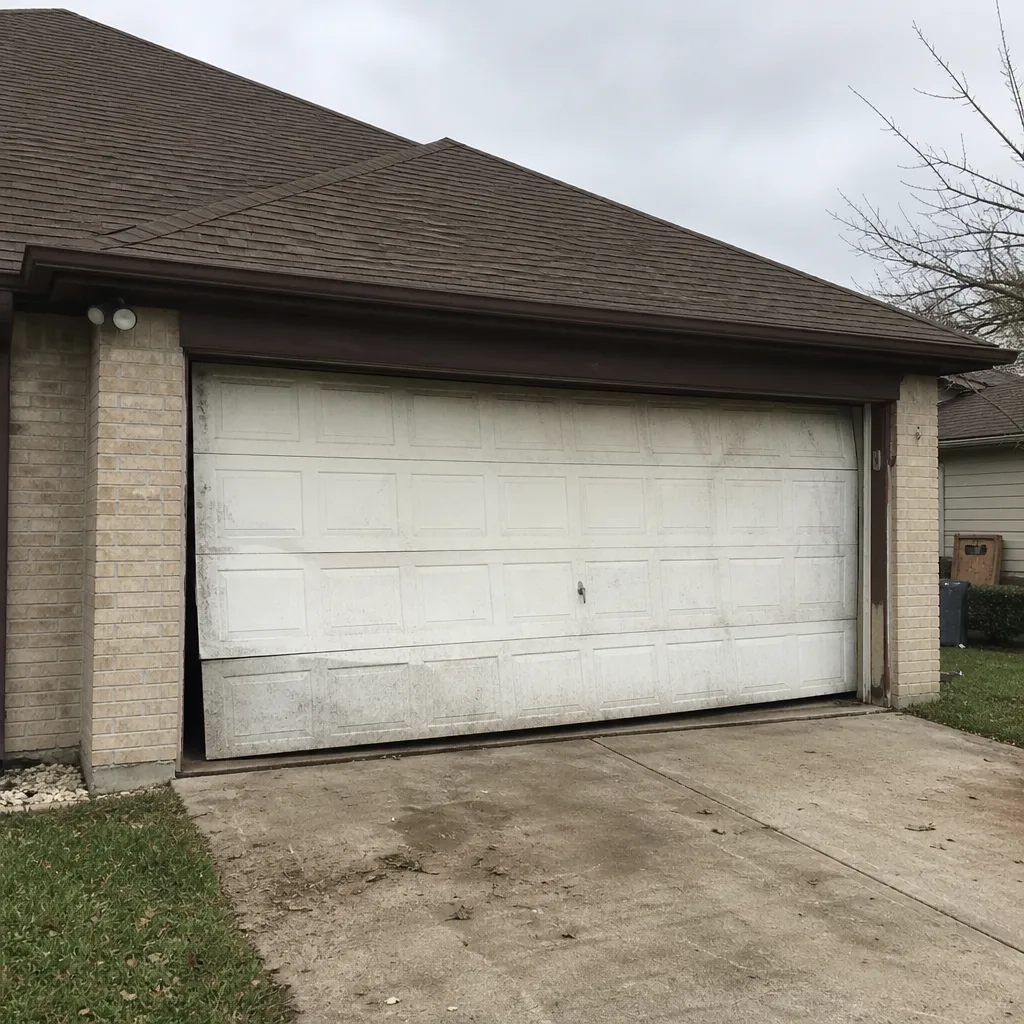 Before
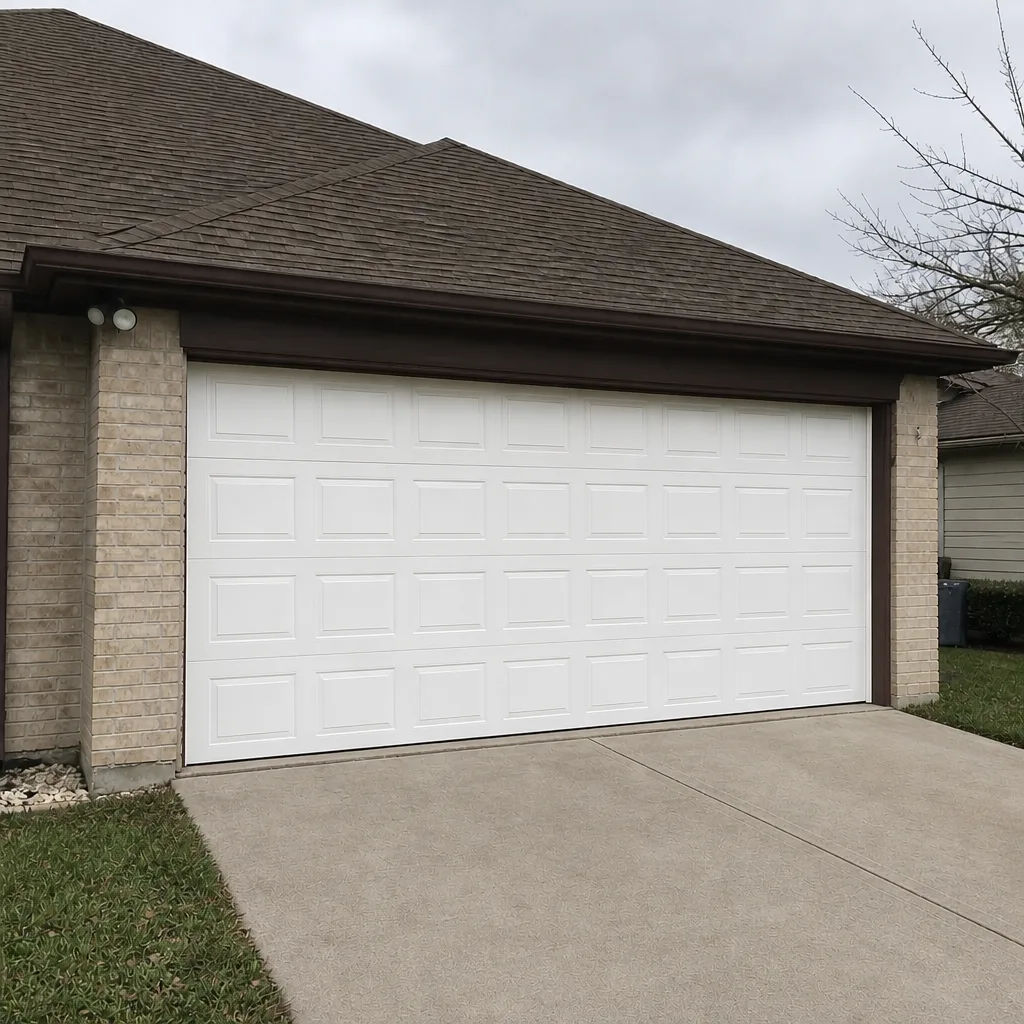 After
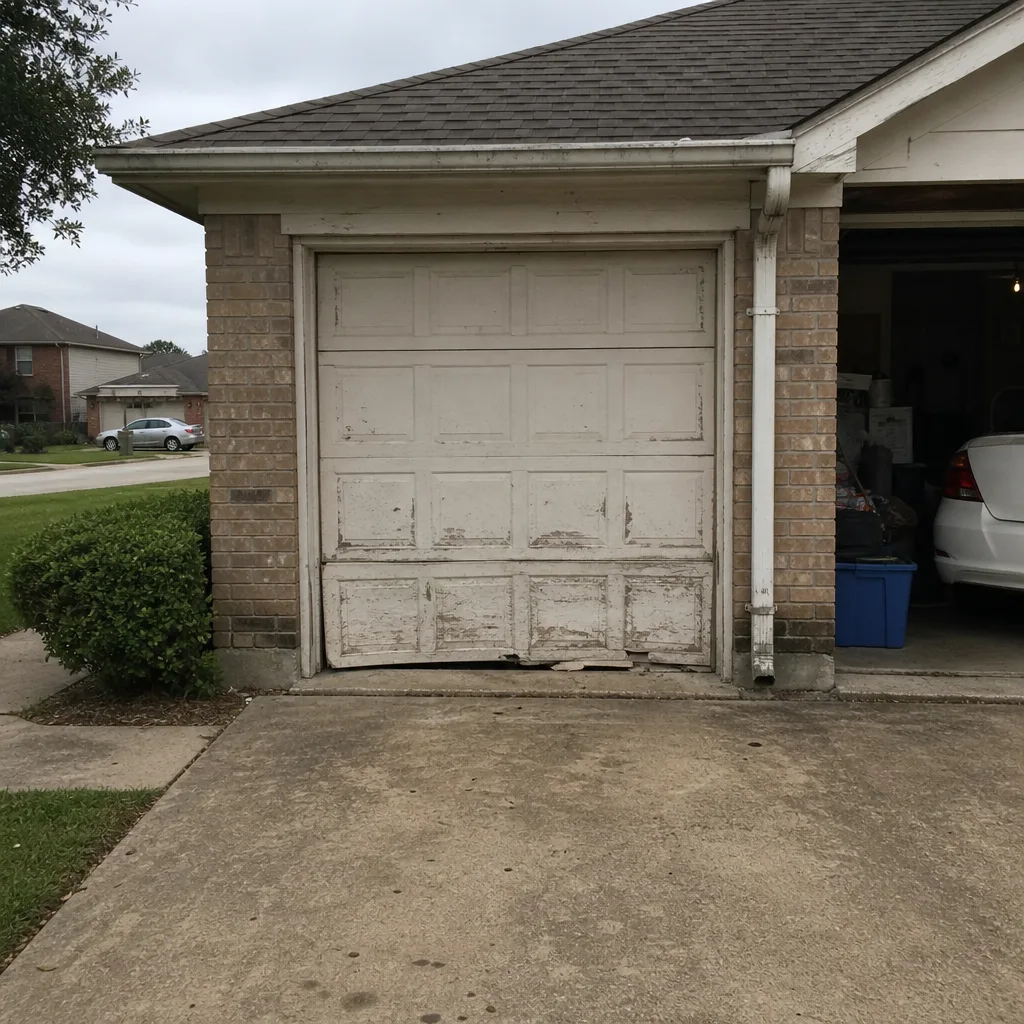 Before
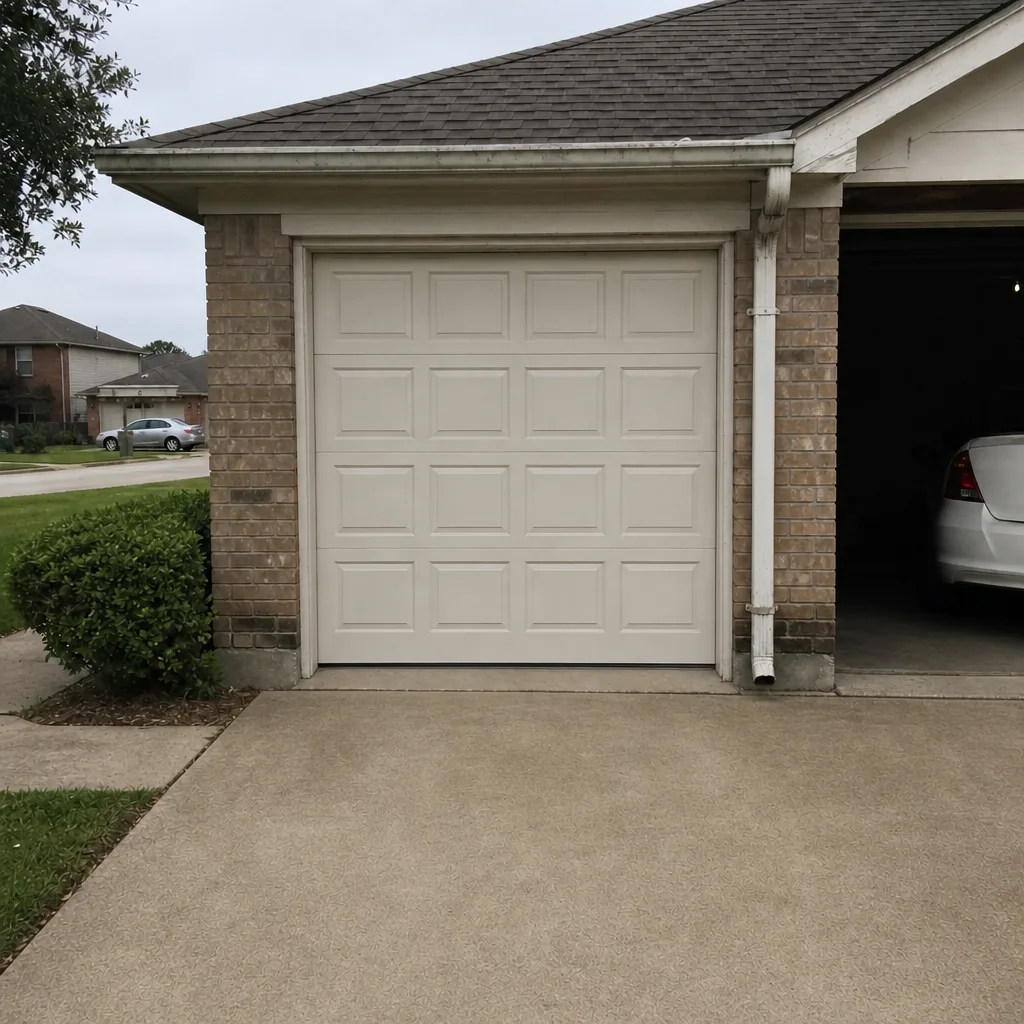 After
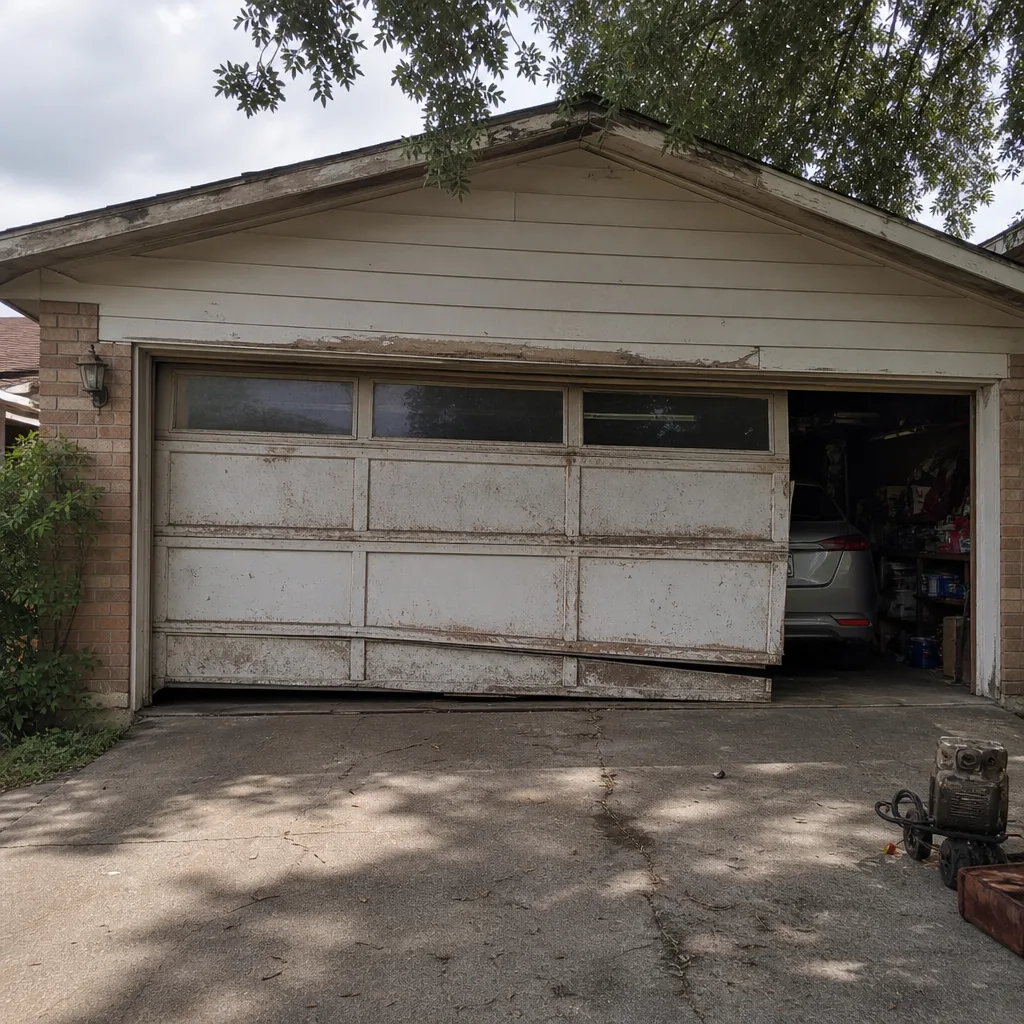 Before
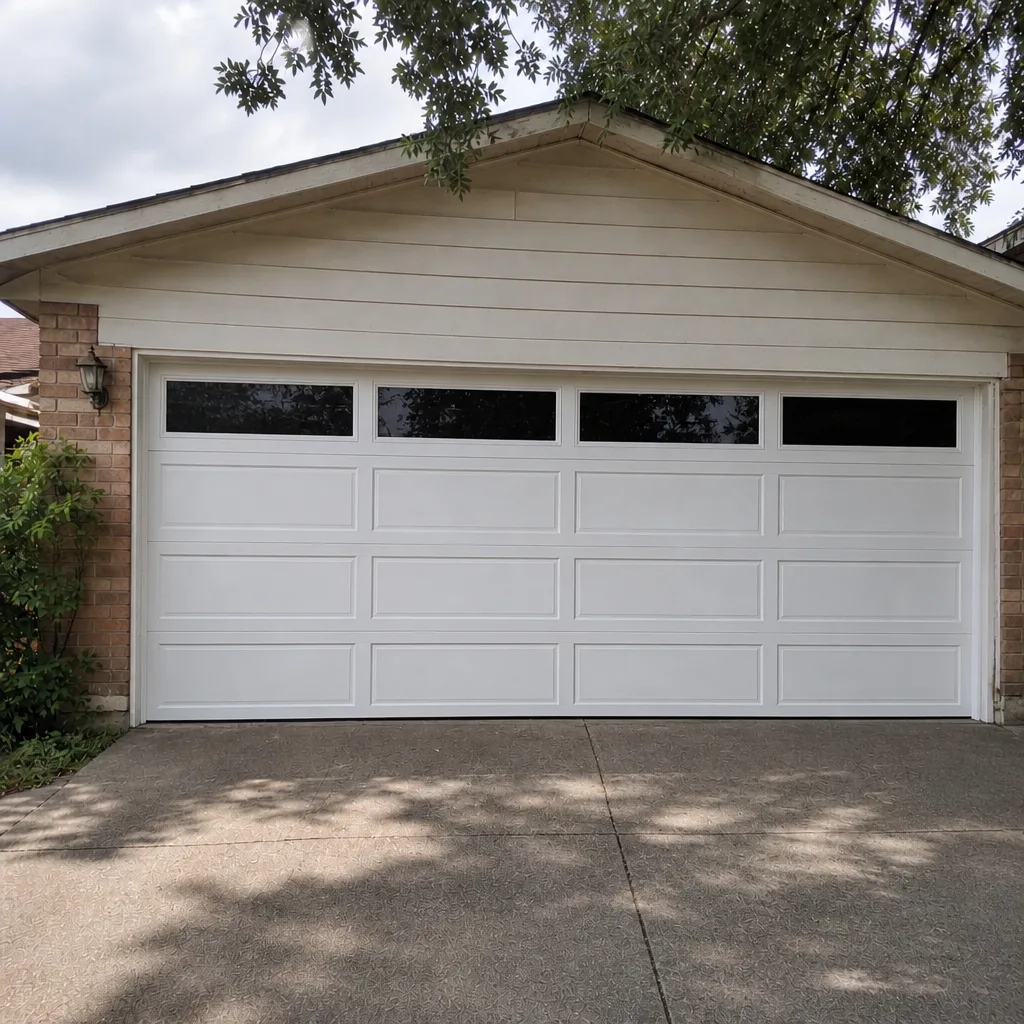 After
When to Call a Professional
Some problems are a call you make today. If a spring has snapped, a cable has jumped its drum, the door is stuck half-open or won’t close, or something has impacted the door and knocked it off its track, stop using it and call. A door that won’t close leaves the house unsecured, and a door that won’t open traps a vehicle. Those are the situations our emergency service exists for, and we state that plainly rather than dressing it up. Beyond emergencies, call when you notice the door drifting out of alignment, rubbing against a jamb, growing heavier to lift, or staying noisy after a round of lubrication – those are the signs that a small repair is still small. Pearland Garage Door Repair Co offers free estimates in Pearland – call (855) 337-1579.
Frequently Asked Questions
Because Pearland’s humidity and shifting clay soil stress garage doors faster than a drier, more stable climate would. Humidity corrodes springs and hardware, and soil movement pushes the frame slightly out of alignment over time, so doors wear on the whole system rather than one part at a time.
If the door is heavy to lift by hand or you see a visible gap in a spring, it’s the springs. If the door moves freely by hand but the motor strains or stops, it’s the opener. Either way, don’t run the door on the opener while a spring is suspect – call for a diagnostic.
Yes. We work on eight leading brands, including Wayne Dalton and Craftsman, along with LiftMaster, Chamberlain, Genie, Clopay, Amarr and Raynor. We service the brand you already have rather than steering you toward new equipment.
Repairs like springs, cables and openers generally don’t require a permit, but a full door replacement may, depending on the city. Ask Pearland’s building department directly to confirm what applies to your job.
Most spring replacements are a same-visit job once the technician has checked alignment and cable condition. The timing depends on whether the tracks need realignment first – doing both together is what lets the new spring last.
We quote and agree on the price before any work starts, so what you approve is what you pay. The written estimate reflects what we actually find on the door, not a phone guess.
The Bottom Line
Garage doors in Pearland wear out on the whole system because the climate and soil work on the whole system. Humidity eats at springs and hardware; clay soil pushes the frame; the two together wear the door out faster than its parts would fail on their own. If you take one thing from this guide, make it this: look at the door as a unit, repair the cause rather than the symptom, and treat spring work as the one job that always belongs with a specialist. Repair first, replace only when it makes sense. Our technicians have up to 11 years of experience and we work on the brand you already have. When your door needs attention, call (855) 337-1579 for a free estimate.
Written by the team at Pearland Garage Door Repair Co.