Last updated November 21, 2026
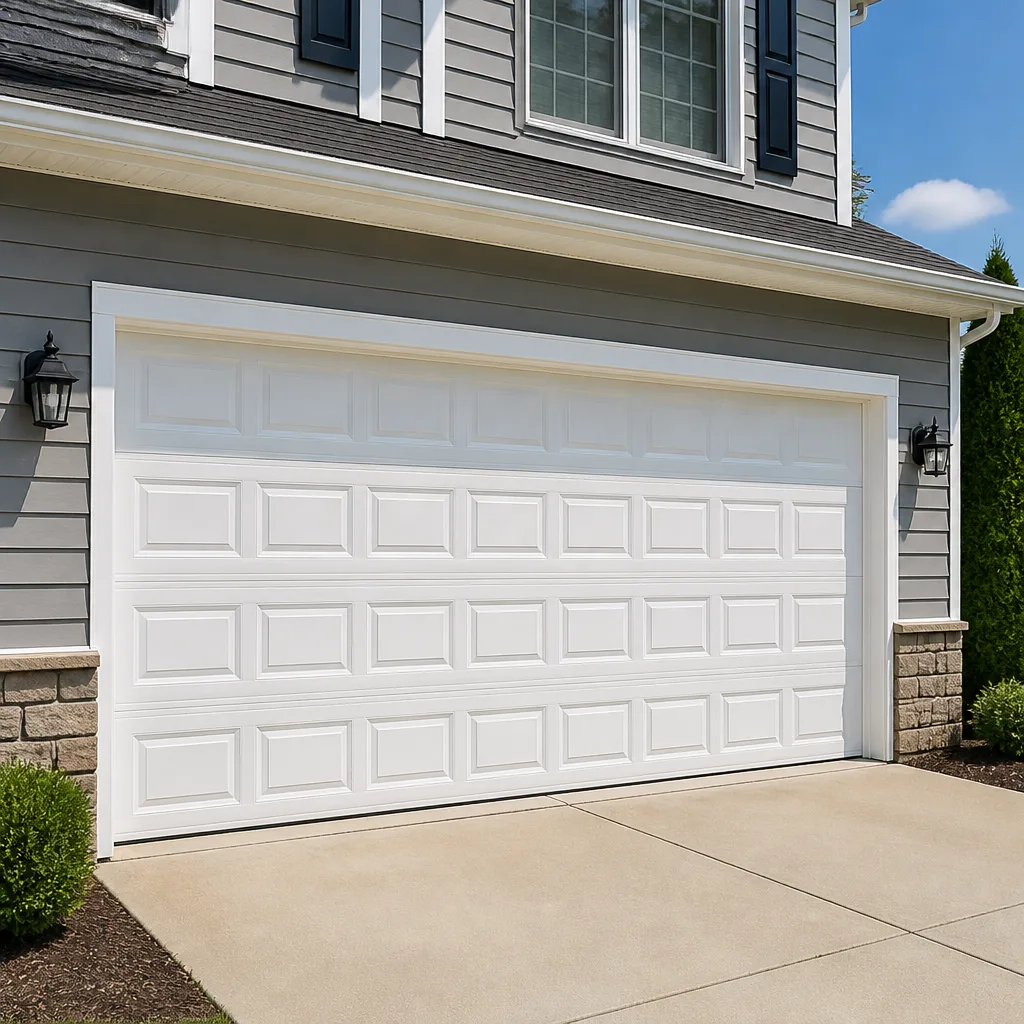 Raised-panel steel
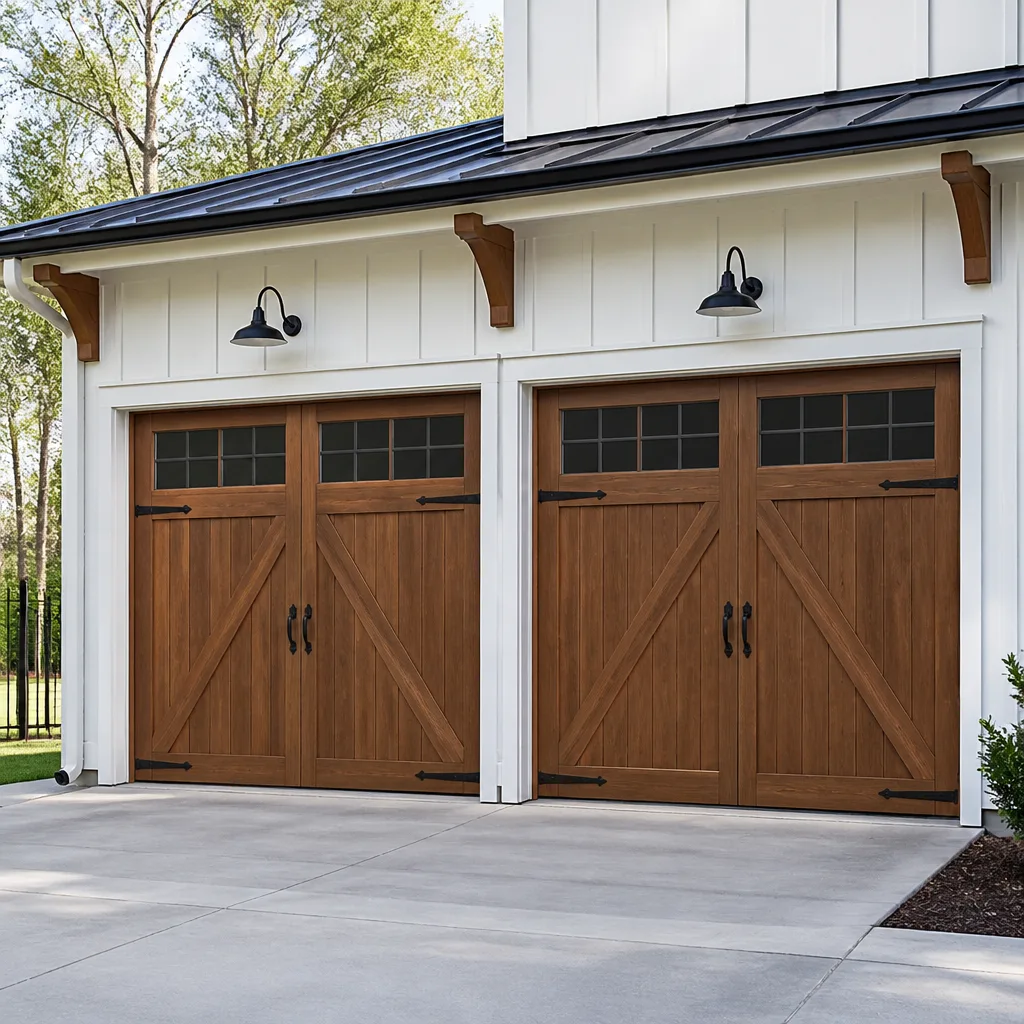 Carriage house
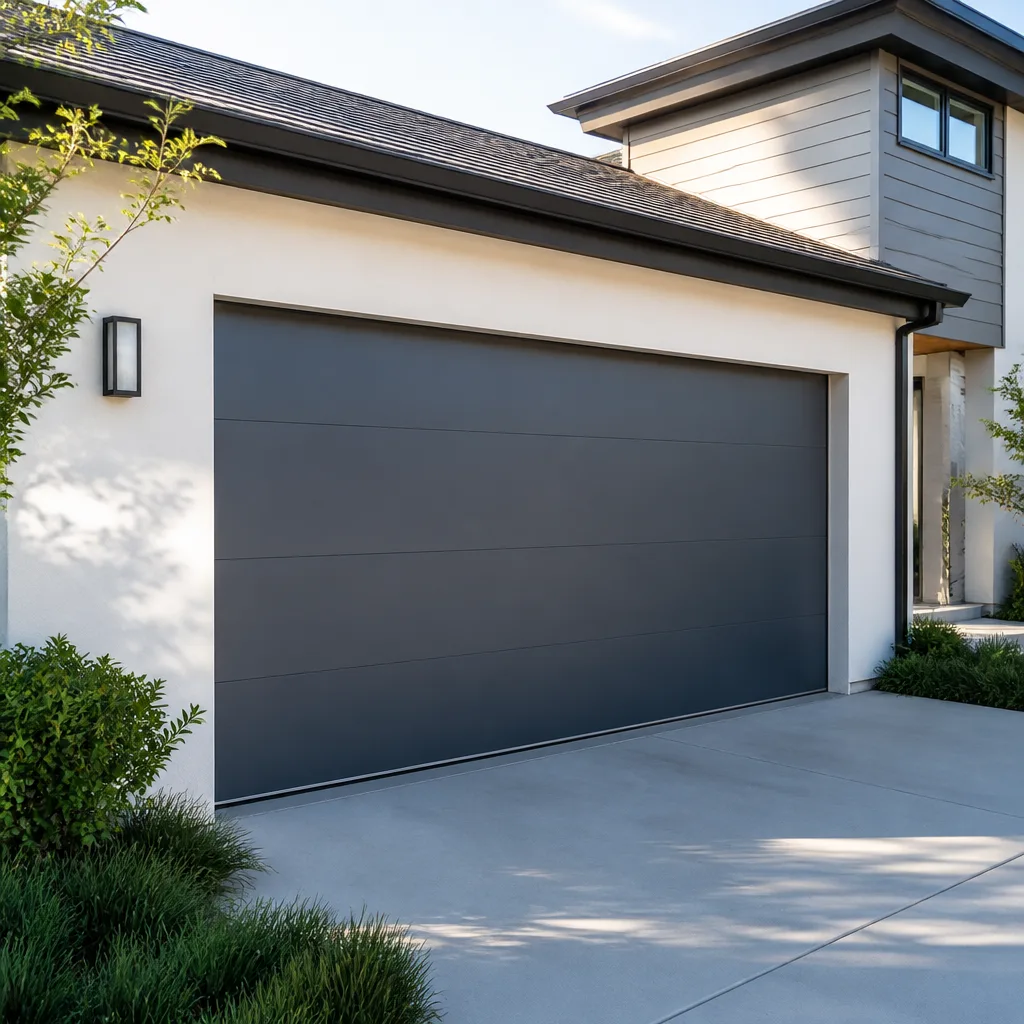 Modern flush
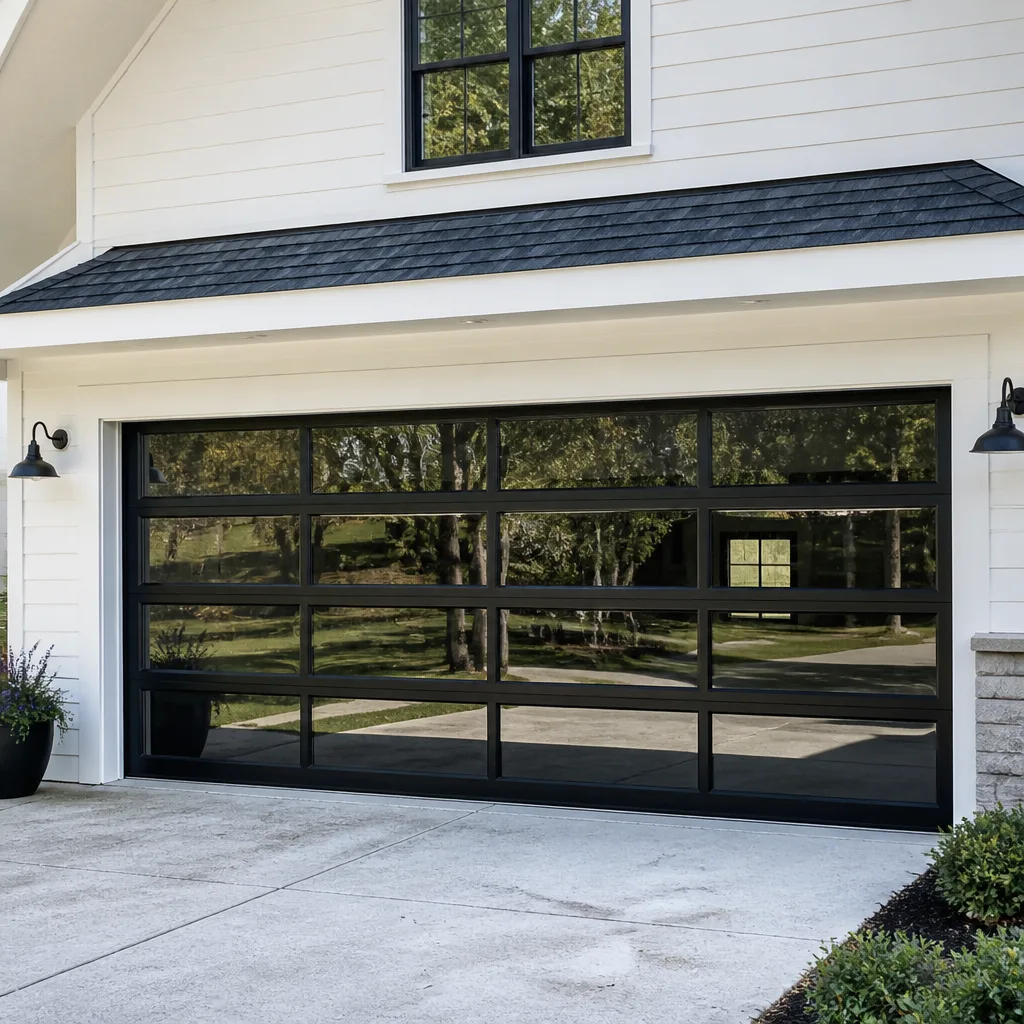 Full-view glass
 LiftMaster openers
 Chamberlain openers
Full 25-point door and opener safety check with every visit - springs, cables, rollers, tracks, and your LiftMaster or Chamberlain opener included
You get a price before we start. It does not change when the pro arrives.
Get your free estimateGarage Door Warning Signs: A Pearland Homeowner’s Reference Guide
A garage door doesn’t snap, jam, or drop off its track without warning. The signs are almost always there for weeks beforehand – a new grind on the way up, a panel that looks a hair off, a door that takes longer to close than it used to. The problem is that most homeowners have no baseline for what a healthy door should sound and feel like, so they file those signs under “just how the door sounds” until the morning it won’t open with the car inside. This guide gives you that baseline: what each noise points to, what to look for from outside the garage, and how to document what you’re seeing so a technician can diagnose it in Pearland quickly instead of guessing.
Quick Answer
A healthy garage door opens and closes smoothly and quietly, stays level across the bottom, and runs at the same speed every time. Warning signs worth acting on include grinding or popping noises, a door that moves in jerks, gaps along one side, frayed or slack cables, and a door that reverses on its own. Any of these usually means a worn part – most often a spring, roller, or opener gear – and catching it early keeps a small repair from turning into a full replacement.
Styles & brands we work with
- Raised-panel steel
- Carriage house
- Modern flush
- Full-view glass
- LiftMaster openers
- Chamberlain openers
Table of Contents
- What a Healthy Garage Door Should Sound and Feel Like
- Reading the Noise: What Each Sound Tells You
- The Outside Inspection: Gaps, Bowing, and Cable Position
- Slow Door: Spring Losing Tension or Opener Overworking?
- Why Your Door Reverses – And Why It’s Not Always the Sensor
- How to Document Warning Signs Before You Call
- Brand-Specific Signals: LiftMaster, Chamberlain, Genie, and Raynor
- Pearland Conditions That Affect Your Door
What a Healthy Garage Door Should Sound and Feel Like
Before you can spot a warning sign, you need a reference point. Most Pearland homeowners have never listened to their door on purpose – they hit the button from the kitchen and walk away. Spend two minutes watching and listening to it cycle once, all the way up and all the way down, and you’ll have a baseline you can compare against for years.
A healthy door should meet these standards:
- Sound: A low, steady hum from the opener and a soft roll from the wheels. No grinding, popping, scraping, or rattling.
- Speed: Consistent from the first inch to the last. It shouldn’t speed up, slow down, or stutter partway through.
- Movement: Smooth travel in both directions with no visible shaking or jerking.
- Alignment: The bottom edge sits level with the floor. Both sides of the door meet the frame evenly.
- Balance: Pull the release cord (with the door closed and the opener disengaged) and lift the door by hand about halfway. It should stay there on its own. If it drops or needs a hard shove, the springs are out of balance.
If your door passes all five, file that away. When something starts to slip, you’ll know exactly what changed and when. That’s the difference between a homeowner who catches a worn roller early and one who replaces an entire door because a $20 part failed quietly for six months.
Reading the Noise: What Each Sound Tells You
Noise is the first warning sign most people notice, and each type of noise points at a specific component. Here’s how to translate what you’re hearing:
Grinding
A grinding sound usually comes from the opener itself, not the door. It’s the sound of worn gears inside the opener housing or a drive chain that has lost its lubrication. On older LiftMaster and Chamberlain units, a stripped plastic gear is a common culprit. Grinding that gets louder over a few weeks is your cue to book garage door opener repair before the opener fails completely and leaves the door stuck.
Popping
A sharp pop, especially one that repeats as the door moves, often means a torsion spring has a small break in one of its coils, or a hinge plate is bending under load. Popping from the springs is a serious signal – a spring under tension that’s already cracked is closer to failing than you want.
Scraping
Scraping along one side points to a bent track, a worn roller, or the door panel rubbing against the frame. If you can see a scuff mark on the metal, the door is dragging.
Rattling
A loose rattle is usually the easiest fix on the list: loose hinge bolts, a worn bottom bracket, or a roller that’s come out of its track slightly. It’s not urgent on its own, but rattling that goes unaddressed grinds down the surrounding hardware.
Squealing
High-pitched squealing comes from dry rollers, hinges, or the torsion shaft. Lubrication helps temporarily, but if it returns within weeks, the bearings are worn.
Write down what you hear and when – on the way up, on the way down, only at the start, only at the end. That detail alone cuts a technician’s diagnostic time in half.
The Outside Inspection: Gaps, Bowing, and Cable Position
You don’t need to open the door to spot half the warning signs on a garage door. A two-minute walk around the outside, with the door closed, tells you a lot:
- Look at the gap along the bottom edge. A healthy door sits evenly against the floor across its full width. A gap on one side, or a gap that changes from week to week, means the door is out of level – a sign of a failing spring or a misaligned track.
- Check the vertical gaps on each side. The door should meet the frame evenly. If the gap on the left is wider than the gap on the right, the door is leaning slightly, which points at one spring taking more load than the other.
- Look for panel bowing. Stand back about ten feet and sight along the door. A panel that bows outward or inward is usually a sign of a bent strut, a failed hinge, or impact damage that hasn’t been corrected.
- Check the cables. With the door closed, the cables should run straight down the sides, tightly wound on their drums. Cables that look slack, that have visible frays, or that sit off their drum are a stop-now warning sign.
- Inspect the track. The tracks should be straight and clean. Dents, bends, or debris packed into the rail will cause the door to drag or come off track.
- Look at the hinges and rollers. A hinge that’s bent or a roller that sits visibly crooked at the joint is a wearable part on its way out.
Cables and springs carry heavy tension, and a frayed cable that snaps can cause serious injury. If you see a cable off its drum or visibly damaged, don’t try to straighten it or test the door yourself – stop and call a professional. For anything spring-related, book garage door spring repair rather than attempting it as a DIY project.
Slow Door: Spring Losing Tension or Opener Overworking?
A door that’s gotten slower over time is one of the most common calls we get, and there’s a big difference between the two causes. The repair cost and the part involved are completely different, so getting the diagnosis right matters.
How to tell the springs are the problem
If the door feels heavy when you lift it by hand with the opener disengaged, the springs have lost tension and are no longer carrying the door’s weight. A spring that’s on its way out typically shows up as:
- The door moves slowly at the start, then picks up speed once the opener gets it past the heavy part.
- The door closes faster than it opens, or vice versa.
- You can hear the opener straining – the motor sounds louder than usual.
- The door won’t stay halfway up on its own when you test it by hand.
How to tell the opener is the problem
If the door moves evenly on its own but the opener struggles, stalls, or reverses, the springs are likely fine and the opener’s gears, capacitor, or logic board are the culprit. Signs include:
- The door jerks or stutters as the opener engages, but moves smoothly once you lift it by hand.
- The opener’s light flickers or the motor cuts out briefly mid-travel.
- The opener runs but the door doesn’t move – the drive is slipping internally.
- Older units (say, a Craftsman or Raynor opener past the ten-year mark) start reversing for no visible reason.
If you’re unsure which one it is, the safe test is to disengage the opener and lift the door by hand. If it’s heavy, that’s a spring issue. If it lifts easily but the opener still struggles, that’s an opener issue. Don’t force a heavy door with the opener – the motor will overheat and you’ll be replacing both parts.
Why Your Door Reverses – And Why It’s Not Always the Sensor
When a garage door reverses partway down, most people assume the safety sensors are blocked or misaligned. Sometimes they’re right. But two mechanical causes are more common than sensor trouble and more dangerous to ignore:
Cause 1: An obstruction under the door
The simplest explanation, and the one to check first. A broom handle, a bike tire, or a piece of debris in the door’s path will trigger the safety reverse. Clear the path and cycle the door once to confirm. This is the genuine sensor issue – and it’s not dangerous.
Cause 2: A binding track or roller
If the door reverses because the resistance is too high, that’s a mechanical problem, not a sensor problem. A bent track, a seized roller, or a hinge under stress causes the door to bind mid-travel, and the opener’s force sensor trips the reverse. This is dangerous because the door is effectively fighting itself every cycle, and the strain accelerates wear on every other component.
Cause 3: A spring in early failure
A torsion spring that’s cracking but not yet broken loses tension unevenly. The door lifts crooked on one side, the opener senses imbalance, and it reverses. This is the most dangerous of the three – a spring that’s mid-failure can break without notice, and a broken spring on a door that’s already in motion can drop it, damage the tracks, and put anyone nearby at risk.
Here’s the practical rule: clear the sensors, then cycle the door once. If it still reverses, stop cycling it. Don’t hold the button down to force it – that forces the opener to push through binding rather than resolve it, and it’s how a small repair becomes a large one.
How to Document Warning Signs Before You Call
The single most useful thing you can do before calling a technician is document what you’re seeing. A phone call that starts with “the door sounds weird” takes a full site visit to diagnose. A call that starts with three photos and a sentence about when it happens gets you a firm diagnostic before the technician’s on the way.
Here’s the sequence to run through before you call:
- Photograph the door closed, from outside, straight on. Get the full door in frame so the technician can see gaps, bowing, and panel alignment.
- Photograph each side of the door where it meets the frame. Note the gap width on each side.
- Photograph the springs and cables. Shoot straight at the torsion bar and the drums on each side. Frayed cable strands or gaps between spring coils will show clearly.
- Record a 20-second video of the door opening and closing. The video captures noise, speed, and movement – three of the four diagnostic categories in one file.
- Write one sentence describing when the problem appears. “Grinding on the way up for the last two weeks” or “reverses about a foot off the floor.”
- Note the brand and model of your opener if you can see it. The sticker on the back or side of the opener housing lists it – LiftMaster, Chamberlain, Genie, and Raynor, along with the rest of the major brands, each have different common failure points.
- Include your ZIP code and neighborhood. Pearland spans a wide area, and knowing whether you’re in a home near Shadow Creek Ranch or in the older parts of town near downtown tells the dispatch team how to schedule.
Send that in and the tech arrives knowing what to check, with the right parts in hand. For doors that need a same-day fix, that preparation is the difference between one visit and two.
Brand-Specific Signals: LiftMaster, Chamberlain, Genie, and Raynor
We service the brand you already have, and knowing the specific failure patterns of the major brands means we can often diagnose a problem from the noise description alone. Here’s what to watch for on the four most common systems we see in Pearland:
- LiftMaster: Gear wear inside the motor housing is the classic failure. A LiftMaster that grinds on the way up, or that runs but doesn’t move the door, usually needs the gear set replaced rather than the whole opener.
- Chamberlain: These share internals with LiftMaster (same parent company), so the drive gear and logic board failures look similar. Chamberlain openers also tend to trip the reverse on a worn belt – a jerk in the middle of travel that stops if you disengage and lift by hand.
- Genie: Older Genie screw-drive openers are prone to the rail developing a rumble or buzz that sounds like grinding but is actually the screw thread wearing. Newer belt-drive Genies often flag a “reversed” light when the travel limits need recalibration, not when the springs are at fault.
- Raynor: Raynor doors are common on newer Texas builds, and their torsion systems are the part to watch. Raynor openers use a travel module that can fail in a way that leaves the door half-open – a sign to call before the door gets stuck.
If you’re unsure which brand you have, the label is usually on the back of the opener motor or inside the battery cover of the wall console. Photograph it and include the photo with your other documentation.
Pearland Conditions That Affect Your Door
Pearland’s Gulf Coast climate – hot, humid summers, mild winters, and almost no freeze – puts specific stress on garage doors that homeowners in other regions don’t see. Knowing the local conditions tells you which parts to check on a schedule rather than waiting for a warning sign.
Humidity and metal parts
Pearland’s summer humidity rusts hinges, rollers, and track connections faster than dry climates. Rusted rollers stop rolling and start scraping, which wears the track. A lubricated hinge is a quiet hinge; a neglected one is a rattle six months from now. Check hinges and rollers twice a year, especially before summer.
Heat and spring tension
Metal expands in the heat, and garage doors left in direct sun all day cycle through temperature swings that slowly weaken torsion springs. A spring that was fine in March often shows its first signs in July or August. If your door gets slower or heavier during the hottest months, that’s a seasonal signal, not a coincidence.
Seasonal storms and power outages
When a storm knocks power, the opener’s battery backup is what lets you get in and out. If your opener doesn’t have a backup battery, that’s worth addressing on its own. If you have one and it hasn’t been tested in a year, test it – a dead backup battery is a sign you’d rather find on a quiet afternoon than during the next outage.
Older homes and original hardware
Pearland’s older neighborhoods have plenty of doors still running on their original hardware. A 15-year-old door with original springs, rollers, and hinges is going to warn you before it fails – the warning signs are just easier to miss because the door has always been a little noisy. If your door is older than the appliances in your kitchen, treat every new noise as a signal to look closer.
Common Mistakes to Avoid
- Ignoring a new noise. A door that’s started to grind or pop this week wasn’t making that noise last month. Any new sound is a signal – dismissing it as “just the door” is how a $50 roller turns into a $500 track replacement.
- Holding the button down to force a reversing door. This is the most common and most damaging mistake. The opener is trying to tell you something, and forcing it destroys the gears on top of the original problem.
- Lubricating a spring. Torsion springs should never be lubricated – the oil traps grit and can cause the coils to bind. Grease the hinges and rollers instead.
- DIY spring work. Springs are under extreme tension and can cause severe injury if they release unexpectedly. They require dedicated winding bars and training that go far beyond general home repair. Never attempt a spring replacement yourself.
- Assuming a slow door means a new opener. In our experience, more slow doors are spring problems than opener problems. Get the diagnosis right before you spend on parts.
- Replacing a door when only the opener is at fault. A door that opens by hand but not by remote needs opener repair, not a new door. A door that’s hard to lift by hand needs spring work, not a new door. Check both before you start pricing a replacement.
- Waiting for a full failure before calling. A garage door that fails at 7am when you need to leave for work costs you far more in time and stress than a planned repair.
See the difference
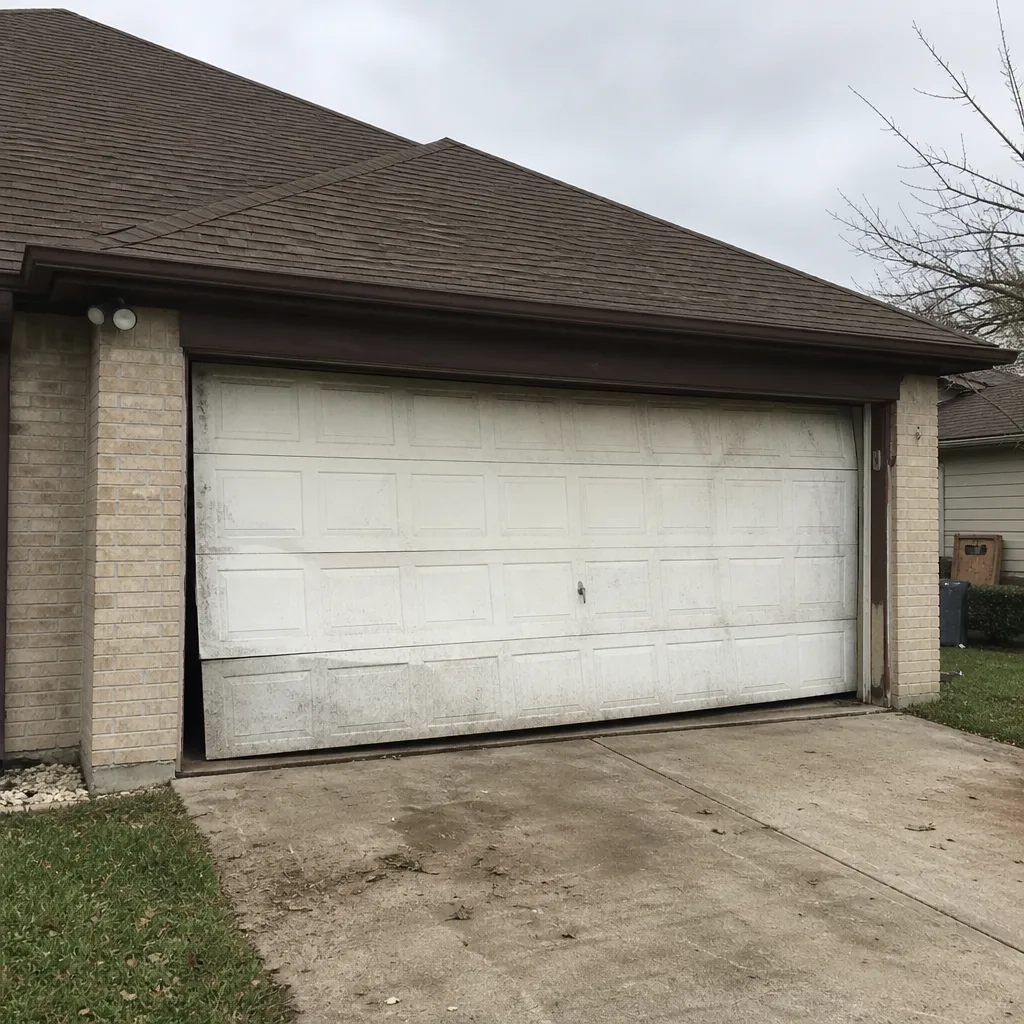 Before
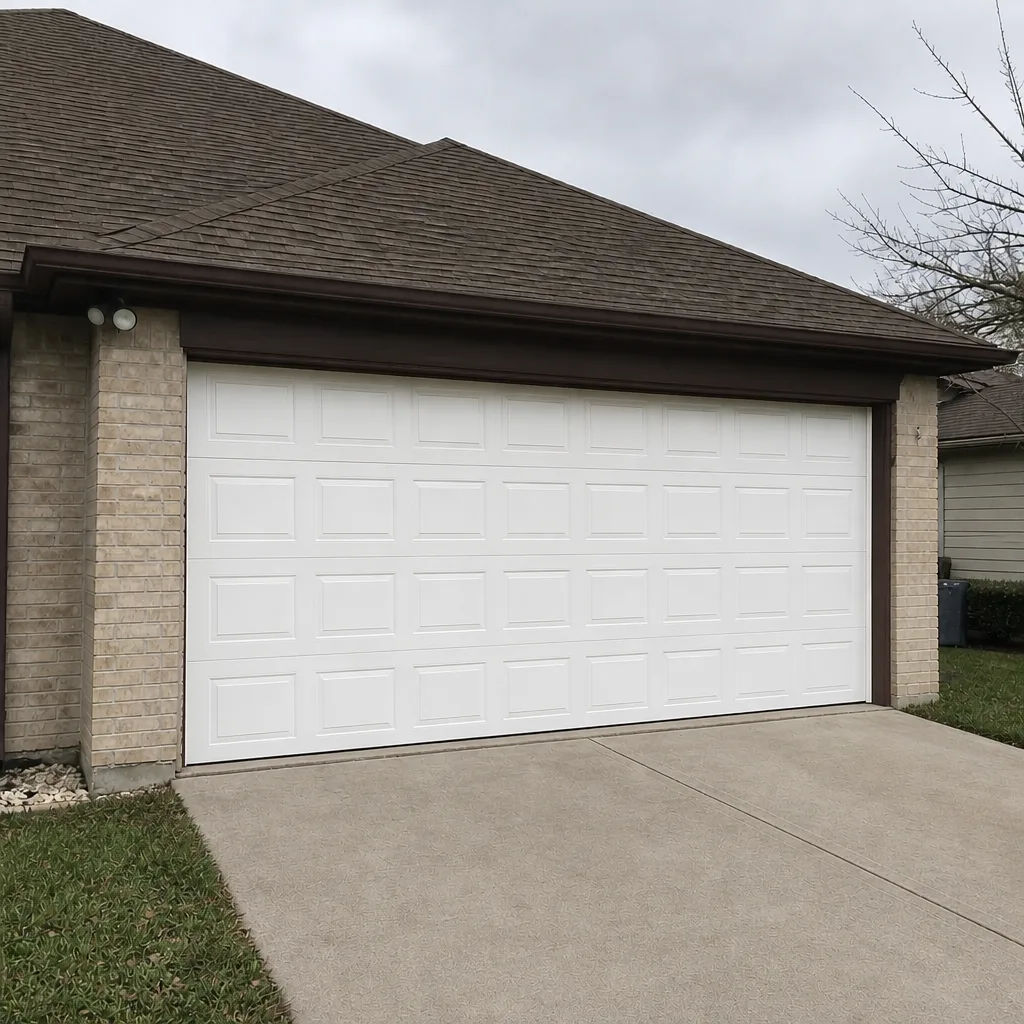 After
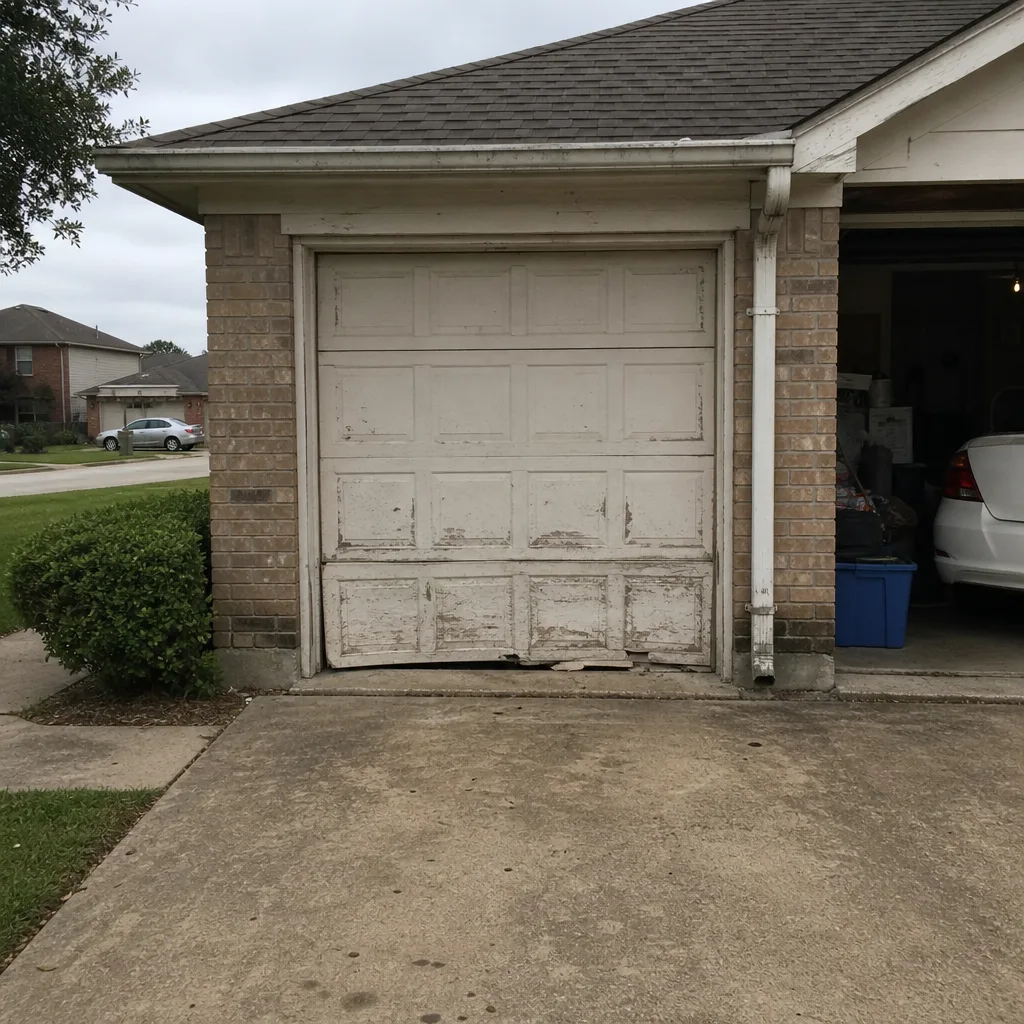 Before
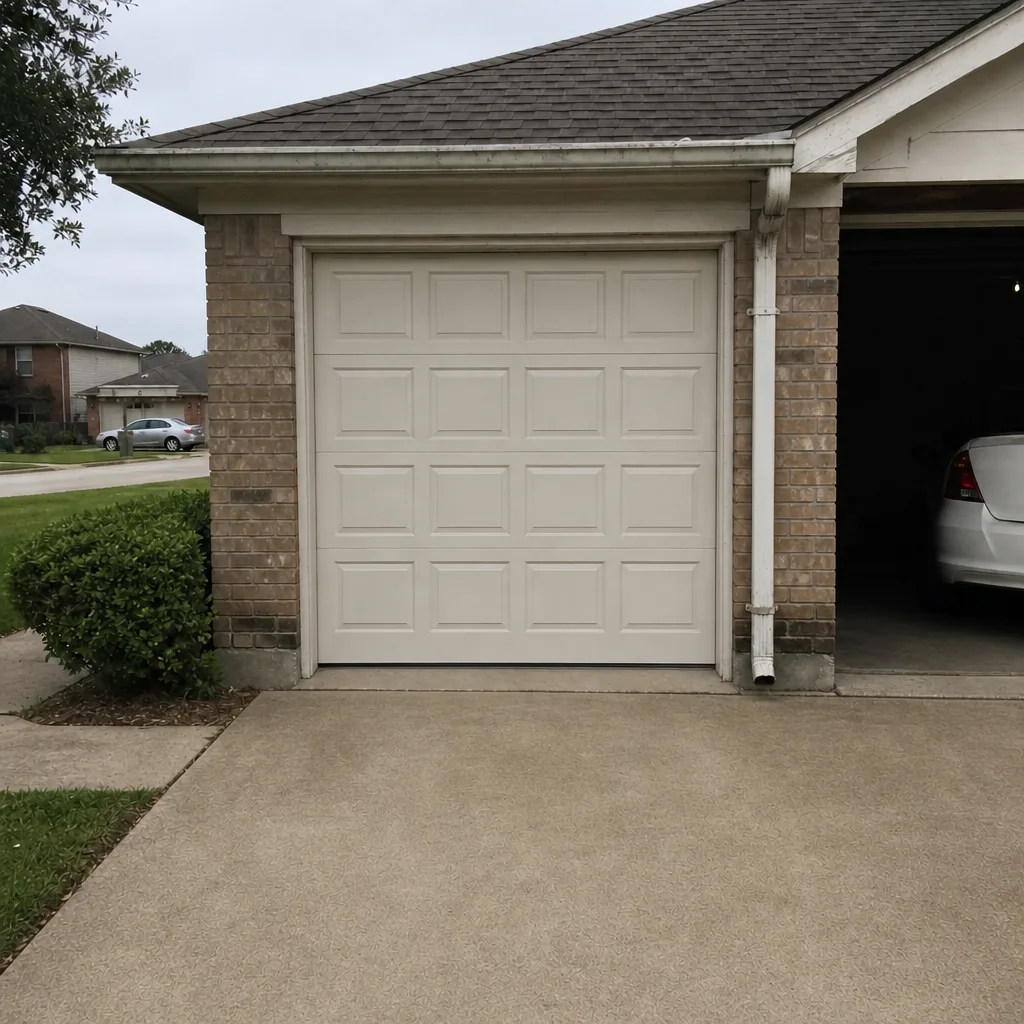 After
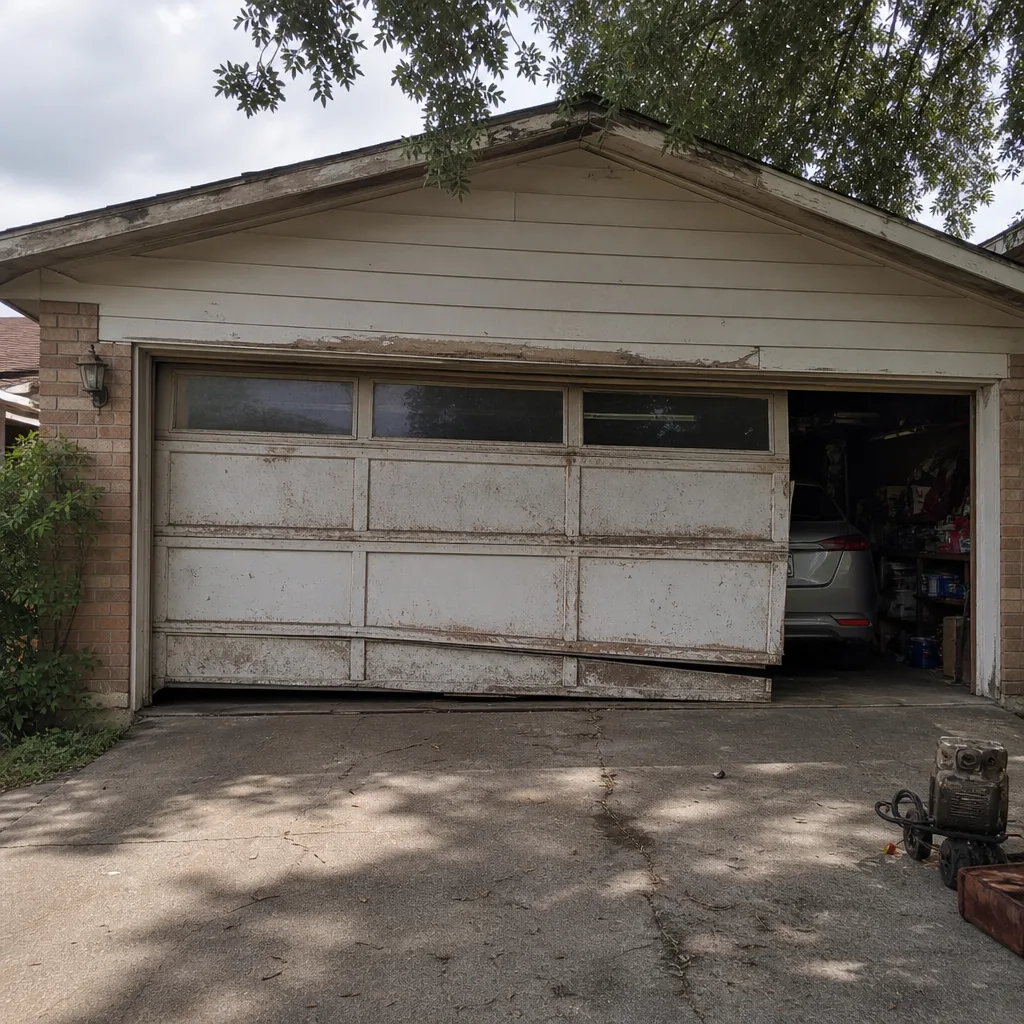 Before
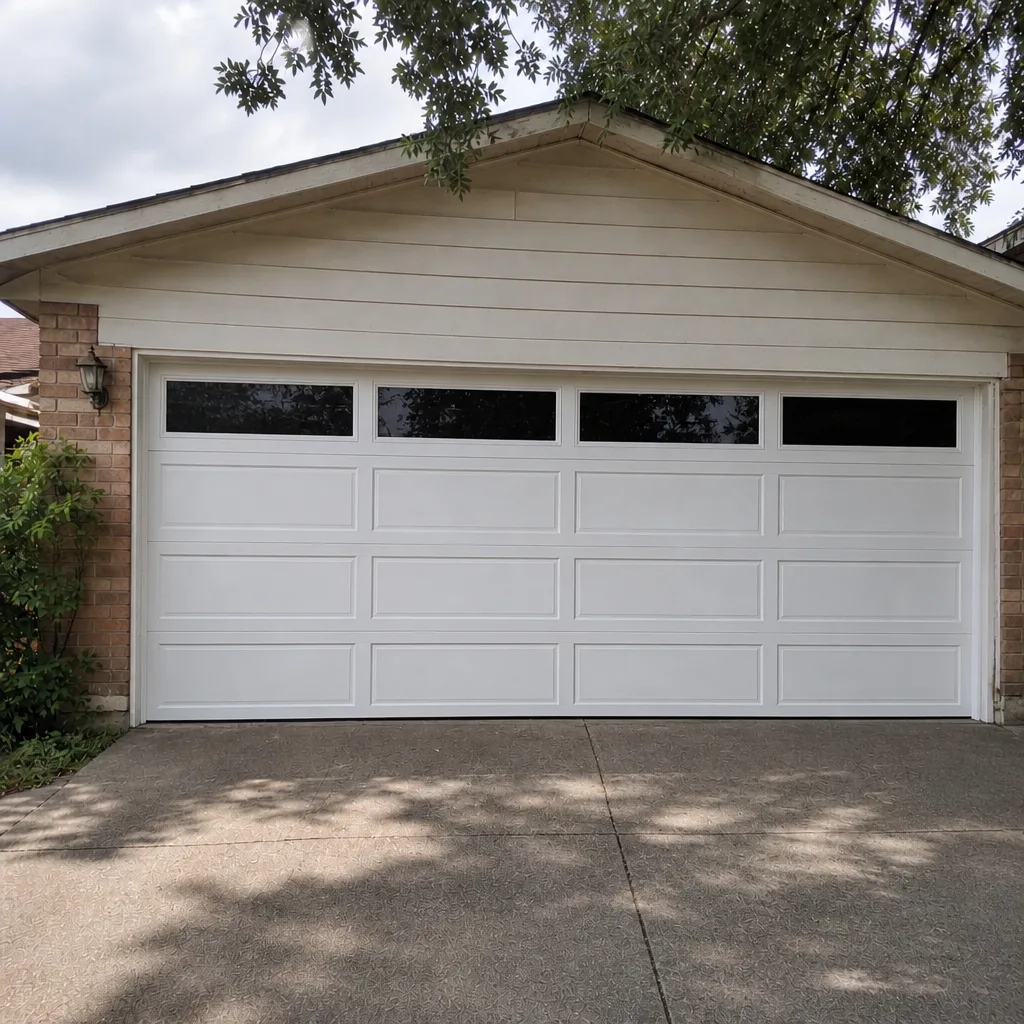 After
When to Call a Professional
Call a professional when the door reverses on its own, when you see a frayed or slack cable, when a spring has visibly cracked or the door has become too heavy to lift by hand, when a panel has bowed or the door is off its track, or when the opener grinds and the door no longer moves. Those are the scenarios where a general handyman isn’t the right call – a garage door specialist with dedicated tools and training is. For routine issues like a worn roller or a loose hinge, a repair visit catches the small problems before they become the big ones.
Pearland Garage Door Repair Co offers free estimates in Pearland – call (855) 337-1579 for a written quote before any work starts. Emergency garage door service is a real offering for doors that leave your home unsecured or your car trapped, and we’ll give you an honest read on whether the door can be repaired or needs to be replaced.
Frequently Asked Questions
The most common warning signs are new or worsening noise (grinding, popping, scraping, or rattling), a door that moves in jerks or at an uneven pace, gaps along the bottom or sides of a closed door, visible cable fray or slack, and a door that reverses on its own. Any one of these is worth a professional look before the door fails.
Garage door repair in Pearland typically runs from about $125 for a basic adjustment or roller replacement up to $450 or more for a track repair or opener gear replacement, with the written estimate setting the final price. Spring replacement is priced separately because a torsion spring carries heavy tension and needs dedicated tools and training. Call (855) 337-1579 for an exact quote – estimates are free.
In many cases, yes – emergency garage door service is a core part of what we do, for doors that leave a home unsecured or a car trapped. Call (855) 337-1579 and we’ll confirm availability for the day. We’re closed on Saturdays and take bookings for Sunday if a door fails over the weekend.
No – the price is quoted and agreed before any work starts. If we open up the door and find something you didn’t know about (a bent track behind the panel, say), we’ll show you and quote the additional work before touching it. You won’t get a surprise invoice.
Yes. The local professionals we connect you with are licensed and insured as Texas requires for garage door work. Our technicians have up to 11 years of experience, and every job is quoted upfront before work begins.
The test is to disengage the opener and lift the door by hand. If the door is heavy or won’t stay halfway up, the springs need replacement. If it lifts easily but the opener still struggles or reverses, the opener is the problem. When in doubt, call (855) 337-1579 and describe what you’re seeing – we can often narrow it down before we arrive.
The Bottom Line
Garage door failures don’t happen without warning – they happen without attention. Every sign in this guide is something you can spot with a minute of listening and a walk around the door, and catching any one of them early keeps a small repair from becoming a full replacement. Keep the baseline in mind: smooth, quiet, level, consistent. When your door stops meeting that standard, that’s your cue. For Pearland homeowners, the seasonal humidity and heat make a twice-yearly check of hinges, rollers, and cables worth the ten minutes. When something’s off, or when a spring or cable shows any sign of failure, call a professional rather than pushing through – springs and cables carry tension that can cause serious injury. Pearland Garage Door Repair Co works on every major brand and treats repair first, replacement only when it makes sense. For a free estimate on any warning sign in this guide, call (855) 337-1579.
For a broader look at the services behind these repairs, our Pearland Garage Door Repair Co home page is the place to start, and if you already know you need a fix, garage door repair walks through what a service visit covers. If you’re still not sure whether the door is at the end of its life, or you’re considering a replacement, note that a full installation is scheduled with a free measure and a written price rather than a same-day fix.
Written by the team at Pearland Garage Door Repair Co.